torstai 30. syyskuuta 2021

Best action camera 2021: the 12 best adventure cameras from GoPro and more

Techradar:

Welcome to our pick of the best action cameras you can buy in 2021. Every adventure camera in our list has been rigorously tested by us to make sure it's deserves its places, whether that's for outright image quality or sheer value.

Whatever your budget, there's an action camera for you in this regularly updated guide. There's now a huge range of rugged 4K cameras at all price points, and we've ranked all the best ones based on our demanding real-world testing.

GoPro remains the biggest name in action camcorders, and its latest GoPro Hero 10 Black is our pick for the title of best action camera overall. But if you're looking for something a little cheaper, the Akaso Brave 7 LE continues to offer a great feature set and value for its price and is one of the best cheap action cameras around. 

If you tend to shoot a lot in low light, it's also well worth considering the Insta360 One R 1-Inch Edition – it has an unusually large 1-inch sensor, even if it isn't quite as fun to use as a GoPro.

Not sure what to look for when buying the best action camera for you? Check out our guide further down this page on what you should look for when buying a new action camera.

Best action cameras 2021:
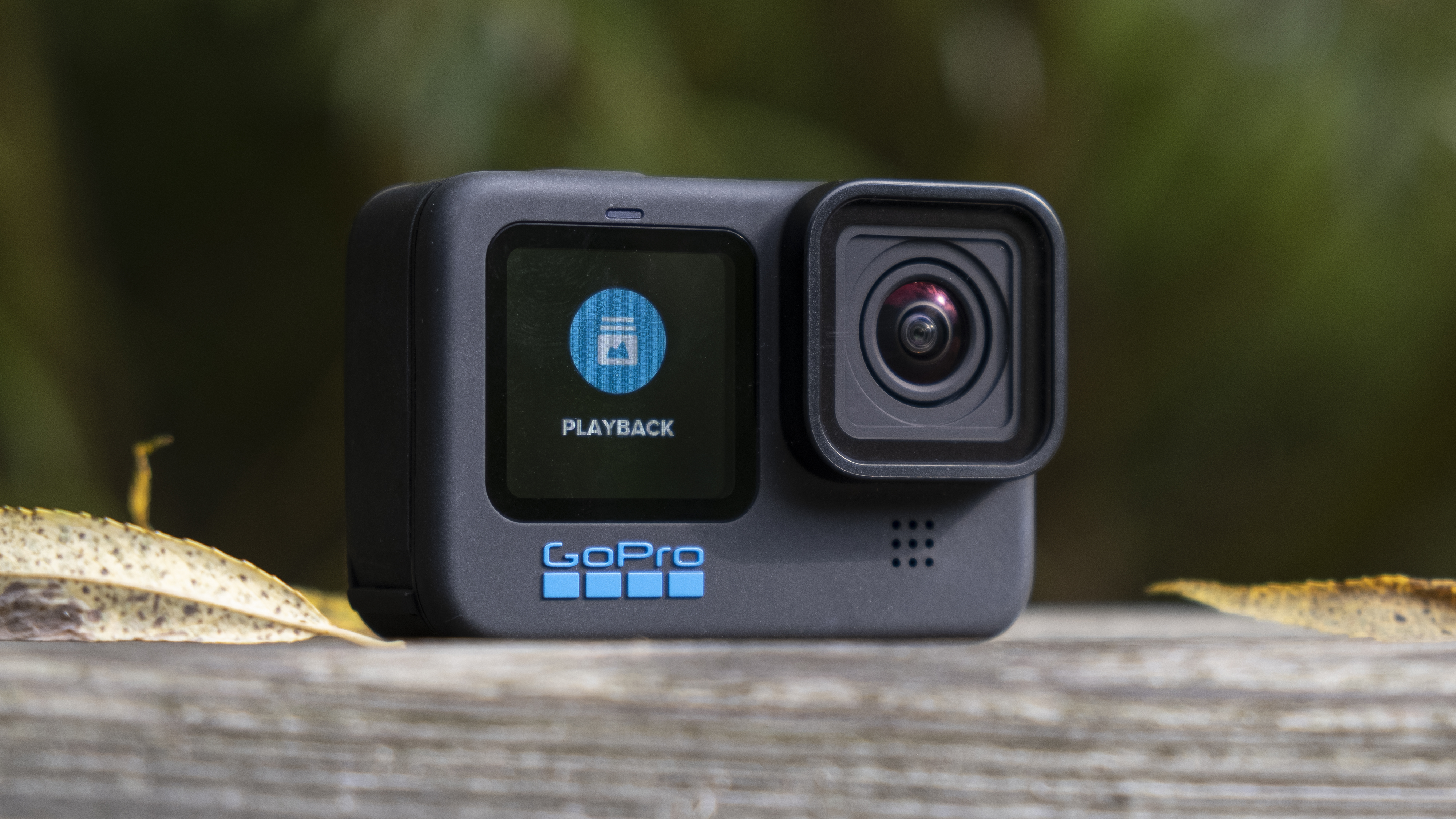
The GoPro Hero 10 Black, the best action camera you can buy, sitting on a wooden bench

(Image credit: Future)

1. GoPro Hero 10 Black

The most versatile action camera ever

Weight: 153g | Waterproof: 10m | 5.3K video: 30fps | 4K video: 120fps | 2.7K video: 240fps | Stills resolution: 23MP | Battery life : 1,720 mAh

Powerful new processor
Handy 4K/120p mode
Class-leading stabilization
Same sensor as Hero 9 Black
Pricier than rivals

GoPro's latest flagship isn't a huge leap over its predecessor, but if you're looking for the most polished, powerful action cam around – this is it. The Hero 10 Black's key upgrade is its new GP2 processor, which unlocks a range of useful features. Some of those, like its ability to shoot 4K/120p video, are genuinely impressive, while others – like its far more responsive touchscreen – feel like fixes for the Hero 9 Black's flaws.

The result is an action camera that's more versatile and fun-to-use than its predecessor, and a waterproof companion that's ideal for capturing outdoor adventures or vlogging videos in 4K. GoPro's best-quality HyperSmooth stabilization, which is now available in more shooting modes, is also excellent and remains a big boon over your smartphone. Better value is available elsewhere, not least in older GoPros like the Hero 8 Black, but we think the Hero 10 Black is worth the premium for most people.

(Image credit: Future)

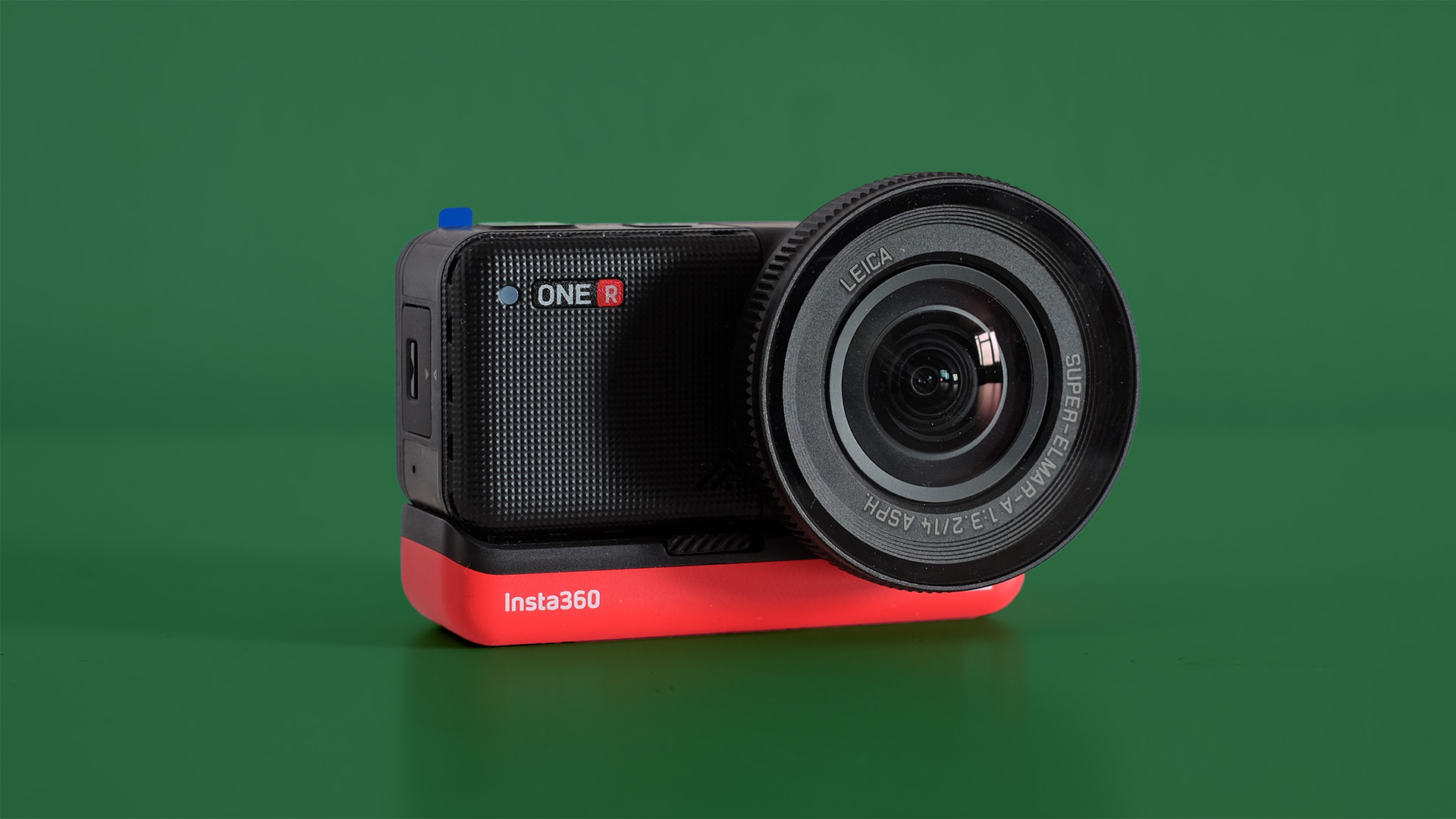
The Insta360 One R 1-inch edition sitting in front of a green background

(Image credit: Future)

2. Insta360 One R 1-inch edition

Better than a GoPro in low light

Weight: 158.2g | Waterproof: 5m | 5.3K video: up to 30fps | 4K video: up to 60fps | 1080p video: up to 120fps | Stills resolution: 19MP | Battery: 1,190mAh

Large sensor for great image quality
Strong low-light performance
Processing niggles
Sluggish software

Already a proven rival to GoPro’s Hero series, the modular Insta360 One R is now available with a sizable 1-inch sensor. That gives it low-light abilities which are brighter, cleaner and more detailed than the GoPro Hero 9 Black, as well as a native dynamic range better than any other action camera. Raw stills are impressive, while videos are sharp and punchy, in both 5.23K/25p and 4K/60p modes. That said, GoPro’s processing powers are more effective overall, with video from the Insta360 One R suffering from shimmer and fizz in detailed areas. The One R also lacks the point-and-shoot simplicity of a GoPro, with more sluggish software when it comes to exporting. All the same, the Insta360 One R produces some of the best stills and video you can get from an action camera. Its 1-inch sensor also handles the crop of image stabilization better than most. A flexible 5K camera with solid low-light skills, the Insta360 One R is one of the best action cams around.

(Image credit: Future)

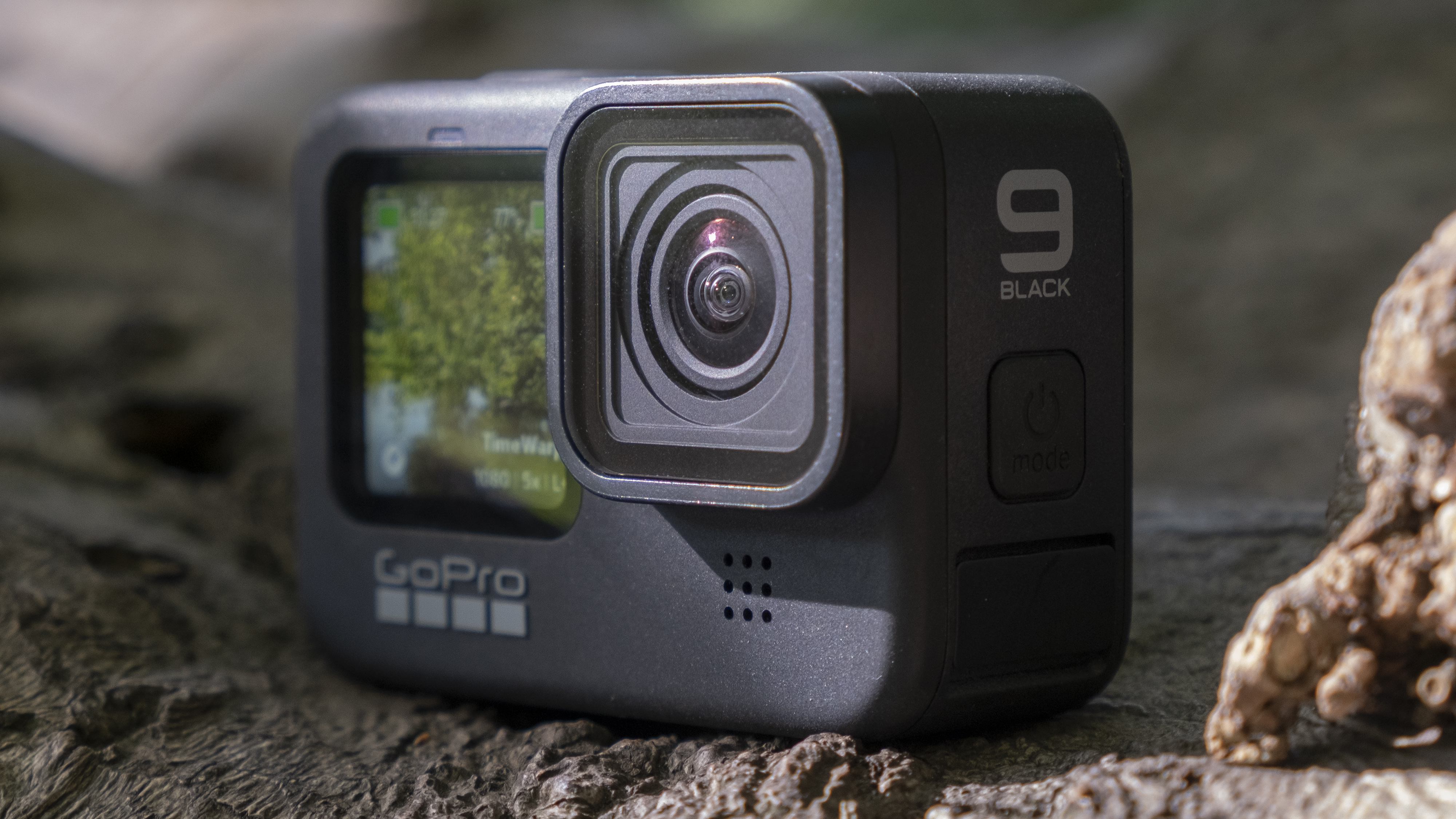
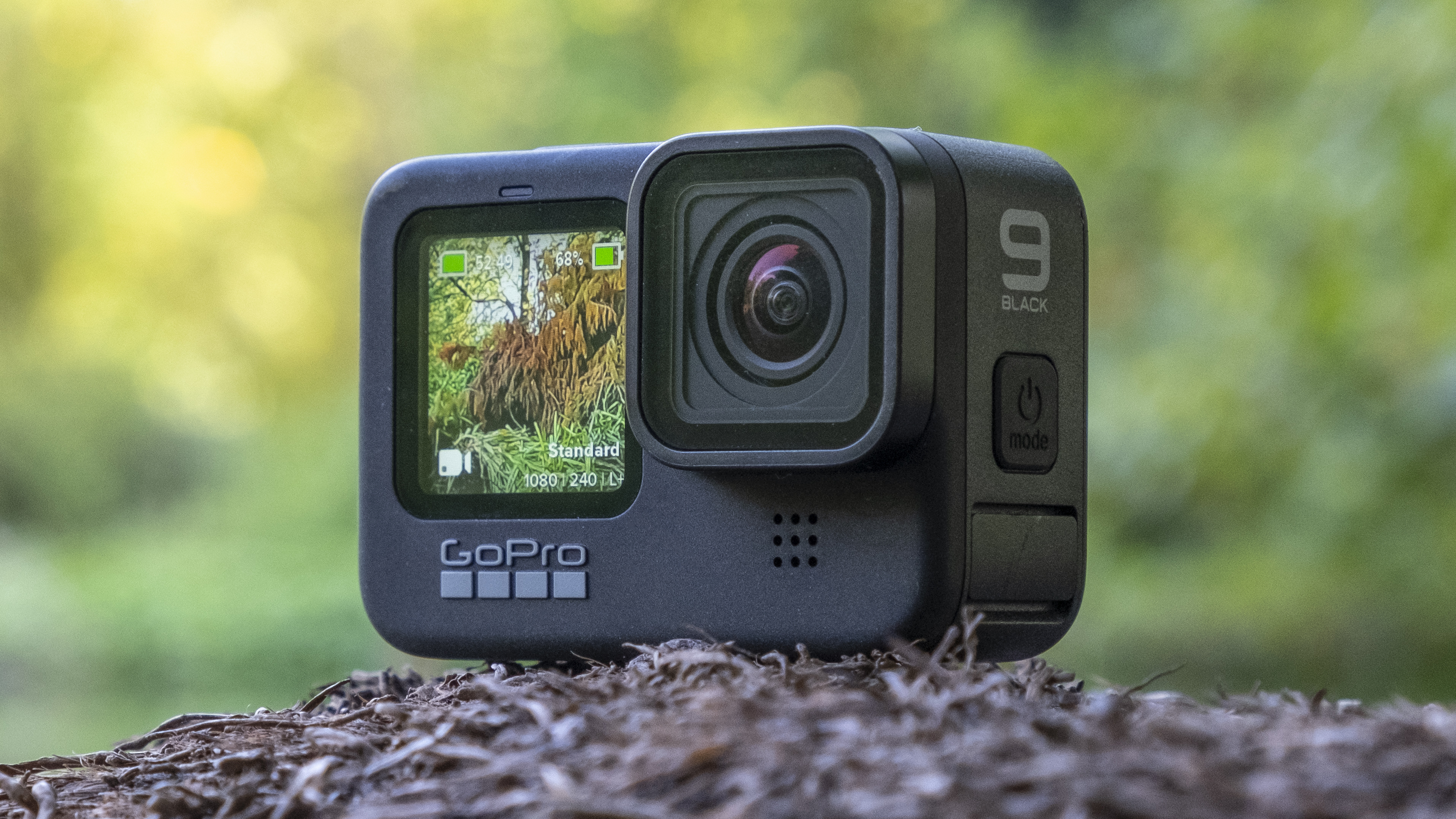
A GoPro Hero 9 Black, the best action camera you can buy, sitting on a tree branch

(Image credit: Future)

3. GoPro Hero 9 Black

Still a fine choice if you don't need 4K slo-mo

Weight: 158g | Waterproof: 10m | 4K video: up to 60fps | 1080: up to 240fps | 720: up to 240fps | Stills resolution: 20MP | Battery: 1720mAh

5K video captures lots of detail
Front display for vlogging
Improved battery life
New software skills
Rear screen currently unresponsive
Little improvement to 4K video

It's now been succeeded by the Hero 10 Black, but the Hero 9 Black is still worth considering if you don't need the absolute latest features – like 4K/120p video or an improved front screen. Given that the price difference between the two models isn't huge, we think the Hero 10 is worth the extra cost for its improved usability, but this model has the same sensor, design and most of the same features.

These include the option of shooting 5K video with excellent detail, courtesy of a 23.MP sensor that debuted on this model. You also get a handy front color display (albeit one that's a little more laggy than the one on the Hero 10) and the option of HyperSmooth Boost (GoPro's strongest stabilization) in all shooting modes. The Hero 9 is super-versatile too, thanks to 'Power Tools' that include 'scheduled captures' (setting a time for it to start recording) and HindSight (for capturing action that happened 15-30 seconds before you hit the shutter). But the Hero 10 is more polished and versatile, thanks to its new processor and shooting modes.

(Image credit: Future)

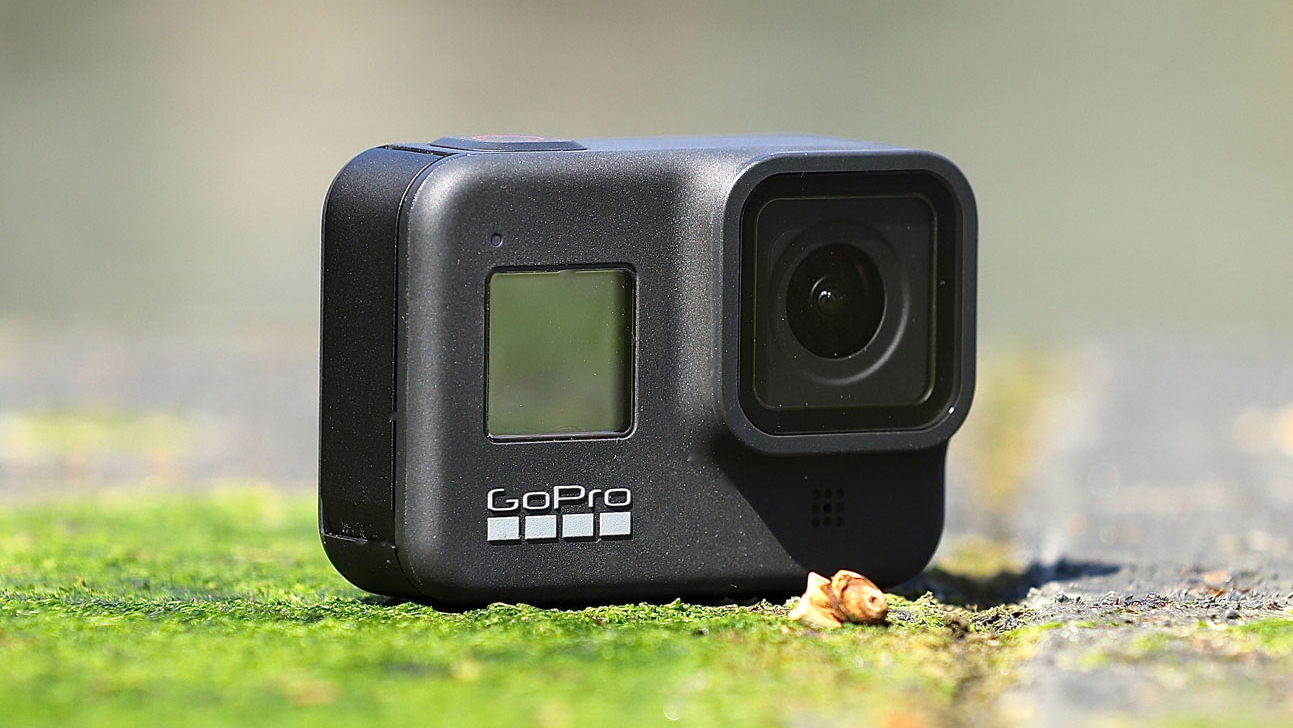
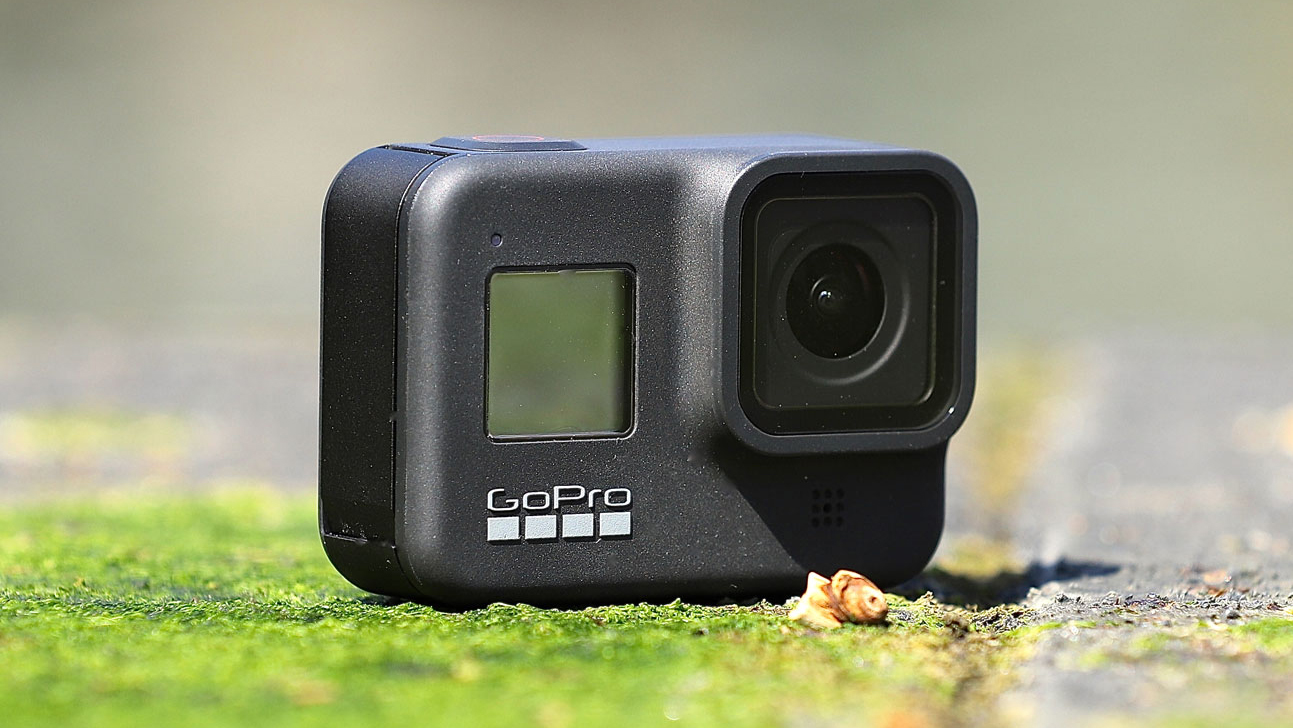
The GoPro Hero 8 Black sitting on a stone step

(Image credit: Future)

4. GoPro Hero 8 Black

A good all-rounder if you don't need a front-facing screen

Weight: 126g | Waterproof: 10m | 4K video: up to 60fps | 1080: up to 240fps | 720: up to 240fps | Stills resolution: 12MP | Battery: 1220mAh

Best-in-class digital stabilization
Time-saving Capture Presets
Built-in mounting arms
Improved mic
Poor low-light performance
No front display

It's now been succeeded by the GoPro Hero 10 Black and Hero 9 Black, but this model could well be the better value choice for you – particularly if you don't need a front-facing screen. What else are you missing out on compared to the GoPro's latest models? Those two successors also bring 5K video modes improved slo-mo options. But if none of those are deal-breakers for you, you'll find that the Hero 8 Black shoots equally impressive 4K video, offers almost identical HyperSmooth stabilization (aside from in the most demanding modes) and has one less color screen to worry about breaking. Thanks to compatibility with GoPro Labs, which is the manufacturer's new platform for trying out unreleased beta features, it also offers much of the same versatility. With the same folding 'fingers' on the underside for mounting it to accessories without a case, waterproofing down to ten meters and compatibility with GoPro's Mods accessories, the Hero 8 Black remains a fantastic all-rounder for its current price. 

(Image credit: Future)
Image 1 of 2

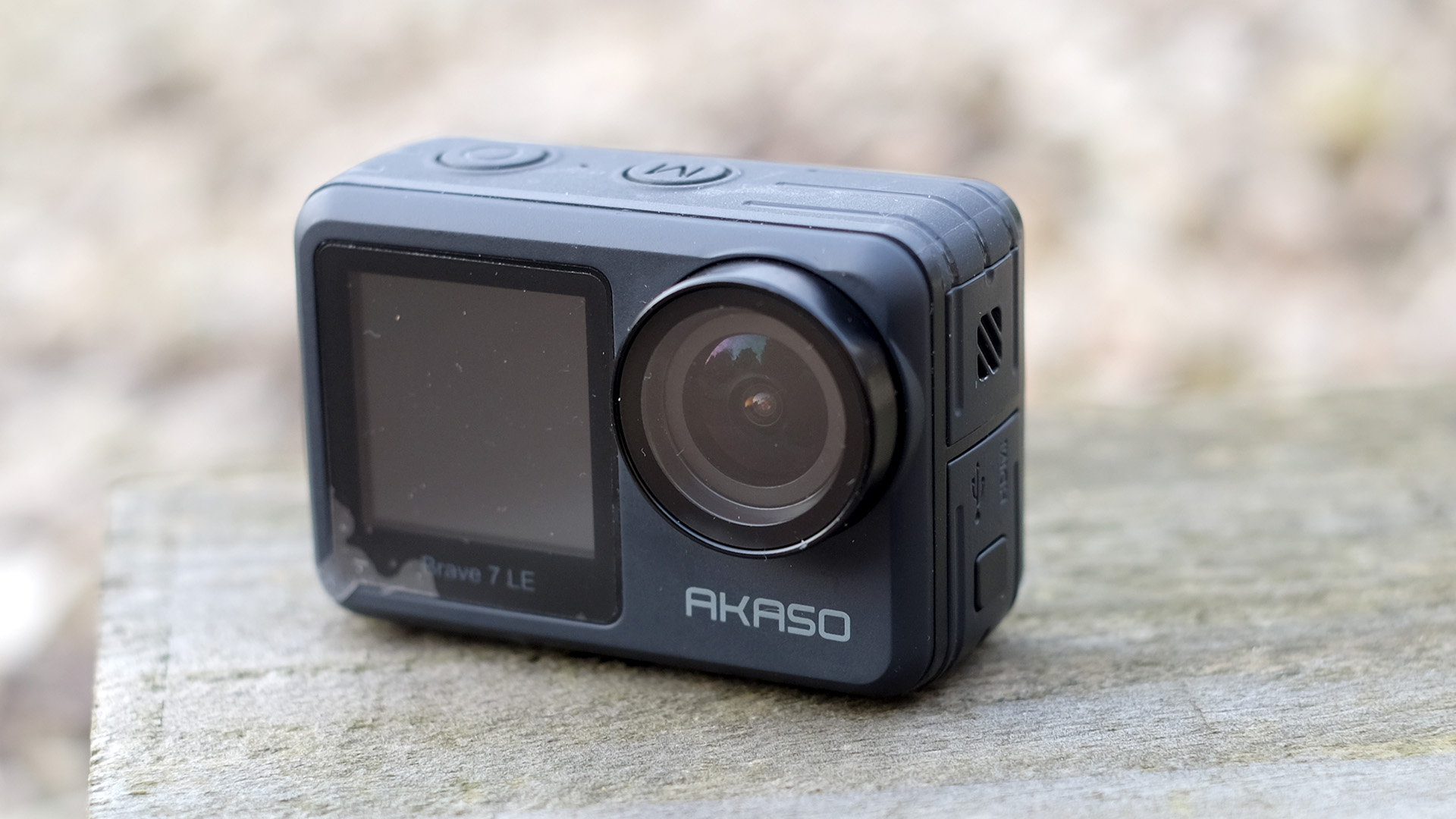
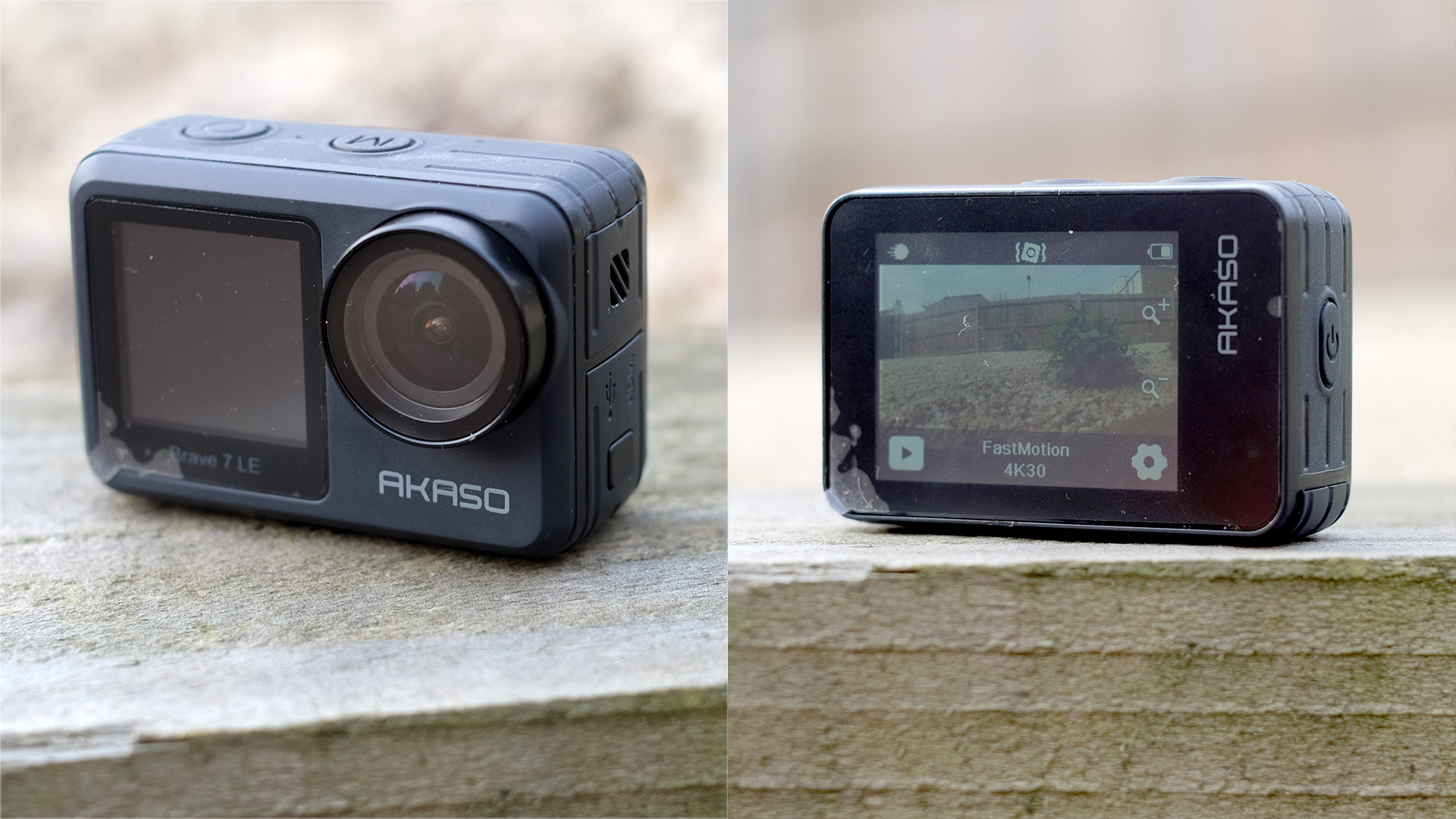
Akaso Brave 7 LE

(Image credit: Future)
Image 2 of 2

Akaso Brave 7 LE

(Image credit: Future)

5. Akaso Brave 7 LE

A great budget alternative to the DJI Osmo Action

Weight: 127g | Waterproof: IPx7(no case needed), 40M (with case) | 4K video: up to 30fps | 1080 video: up to 120fps | 720 video: up to 240fps | Stills resolution: 20MP | Battery life: 120 mins

Dual screens
Case-free water resistance
Class-leading build quality
Poor 60fps footage
Jumpy electronic stabilization
Cheaper options have better 4K

The Brave 7 LE offers an incredible range of features for its price – if a front-facing screen and weather-sealing are more important to you than outright video quality, then it should certainly be high on your shortlist. In our tests, this model's audio quality was better than any other non-GoPro we've reviewed (in quieter environments, anyway) and it has a fantastically intuitive touchscreen interface.

The only slight downer is that the video quality, while decent at 4K resolution, doesn't quite match the rest of the Brave 7 LE's features. It leans heavily on noise reduction in lower light, giving your footage a soft quality, while the electronic image stabilization is decent rather than class-leading. Still, for the price, it's undoubtedly one of the best action cams out there – and unrivaled in terms of the amount of features it packs in for the price. 
(Image credit: Future)

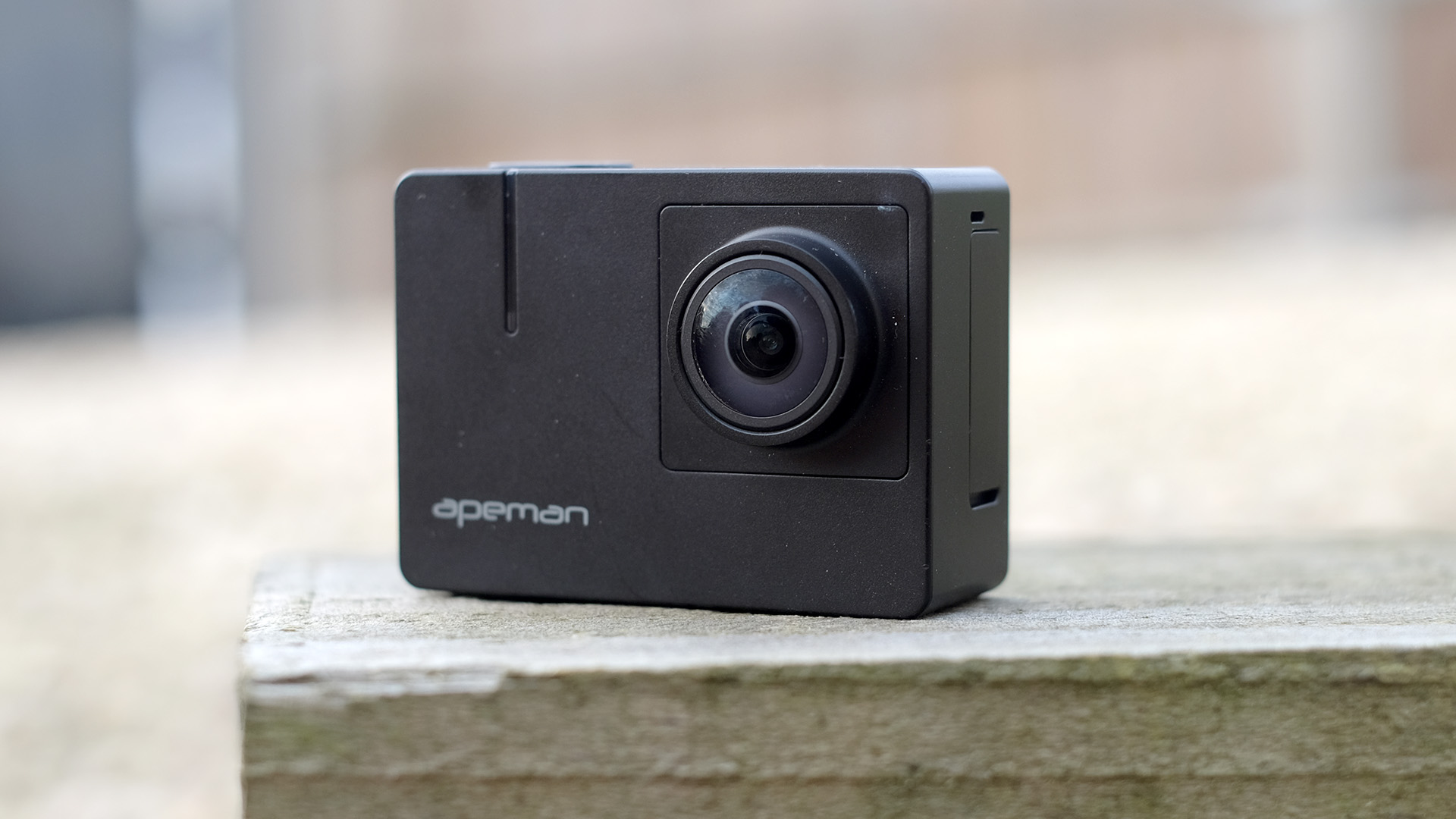
The Apeman A100 sitting on a beige wall

(Image credit: Future)

6. Apeman A100

A bargain cam with flagship 4K skills, if you can still find it

Weight: 74g | Waterproof: 40m (with a case) | 4K video: up to 50fps | 1080p video: up to 60fps | 720p video: up to 120fps | Stills resolution: 20MP | Battery: 1,350mAh

High-quality 4K video
Outstanding value
No-frills build quality
Stabilization could be better

Don’t let its underwhelming shell fool you: the Apeman A100 might be a plastic brick without the finesse of a GoPro, but it’s the best budget action cam you can buy. The only downside is that stock appears to now be in short supply. But if you can find it, the A100 still offers great value for money. In the right conditions, it produces sharp 4K footage at up to 50fps, with detail that’s not far off a GoPro Hero 8 Black – albeit without the latter's charming color profile. The A100 also does a reasonable job of shooting in low light, while panned motion is smoother than almost any other affordable action cam. Stills are solid too, especially if you take the time to tweak the color balance in post-production. Image stabilization is not nearly as good as a GoPro, with evident footfall judder, while audio quality is a real let-down, limiting the A100’s usefulness for vloggers. All the same, it’s a very appealing little package. At 74g it’s perfect for pockets, while port covers and soft-click buttons belie its price tag. You simply won’t get a better 4K action cam experience in this budget bracket.
(Image credit: Future)

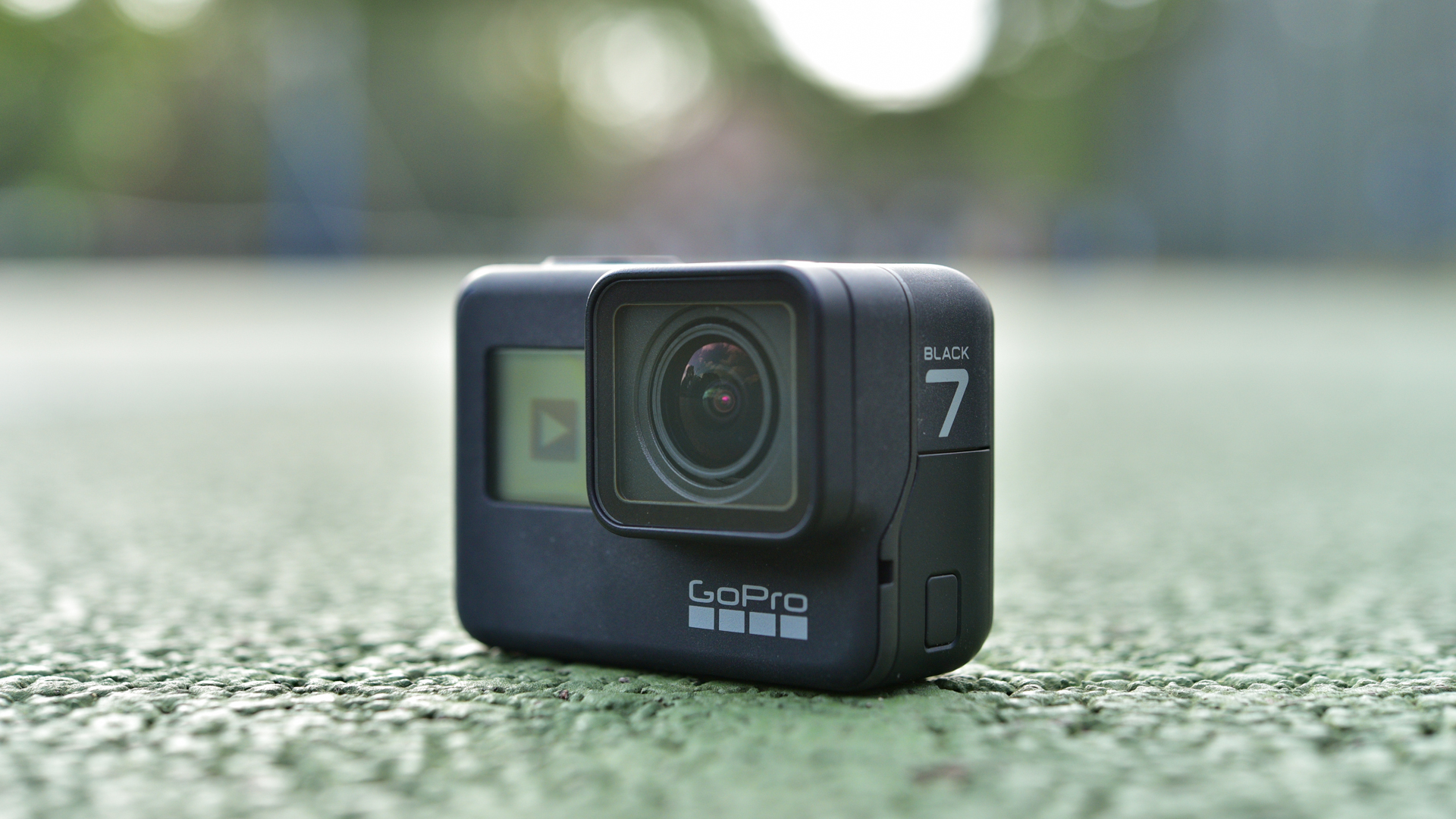
The GoPro Hero 7 Black sitting on a tarmac surface

7. GoPro Hero 7 Black

Now officially discontinued, but still available to buy

Weight: 118g | Waterproof: 10m | 4K video: up to 60fps | 1080: up to 240fps | 720: up to 240fps | Stills resolution: 12MP | Battery life: 1-3hrs (est)

Great 4K video and image quality
HyperSmooth is very effective
Can struggle with voice commands
Screen unresponsive at times

It's now been ousted from GoPro's official line-up, with the Hero 8 Black officially the company's entry-level option. But plenty of Hero 7 Black stock remains at good prices, and it's worth considering if you need a more basic action camera that still has GoPro's excellent HyperSmooth stabilization. While it shoots 4K video, the Hero 7 Black doesn't offer this in 'Linear' shooting mode, which corrects the fish-eye distortion you get in wider shooting modes, and there's no high bit-rate 100Mbps mode either. 

But if you're happy to mainly shoot in 2.7K or 1080p, the Hero 7 Black captures excellent quality video at frame-rates up to 120p, while offering the original versions of TimeWarp (for shooting hyperlapses) and HyperSmooth stabilization for smoothing out any judder. The other main difference from recent GoPros is that this model lacks built-in mounting fingers, which means you'll need the included mounting frame to attach it to objects. But that's not a huge deal and in most other respects (battery life, ruggedness, waterproofing and 12MP SuperPhotos) this model is a match for the Hero 8 Black.

(Image credit: Future)

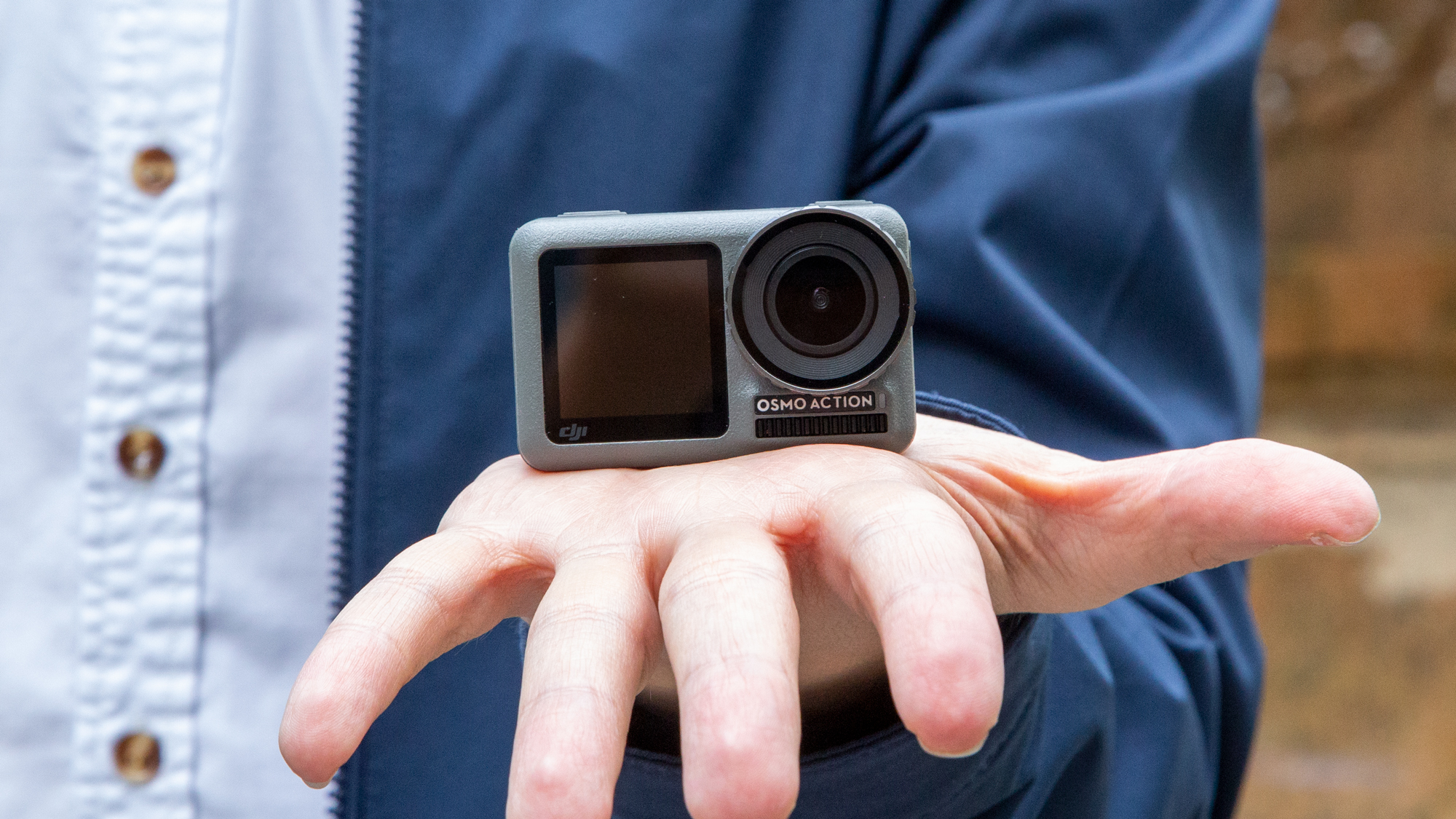
The DJI Omso Action being held in an upturned palm

(Image credit: Future)

8. DJI Osmo Action

More than just a GoPro clone

Weight: 134g | Waterproof: 11m | 4K video: up to 60fps | 1080: up to 240fps | 720: up to 240fps | Stills resolution: 12MP | Battery life: 1-2.25hrs (est)

Forward-facing color monitor
Good motion stabilization
Rich color reproduction
No motion stabilization for HDR video
No livestreaming

DJI might be better known for its class-leading drones, but the Osmo Action is a compelling GoPro alternative with some nifty tricks and a tempting price tag. That said, there are now growing rumors that DJI is preparing to launch a DJI Action 2 – so unless you need one urgently, we'd probably hold fire on getting an Osmo Action right now.  

The Osmo Action's front display and general user-friendliness mean it does trump the GoPro Hero 8 Black (if not the new Hero 10 or Hero 9) for vloggers who like to shoot a lot to camera, while the video quality is right up there with the best 4K action cams. The Osmo Action does also offer handy extras like a removable battery and lens cover. Hopefully, we'll see these features and more in its rumored successor, but if you can't afford to wait, it remains good value – particularly if you prize that front-facing screen. 

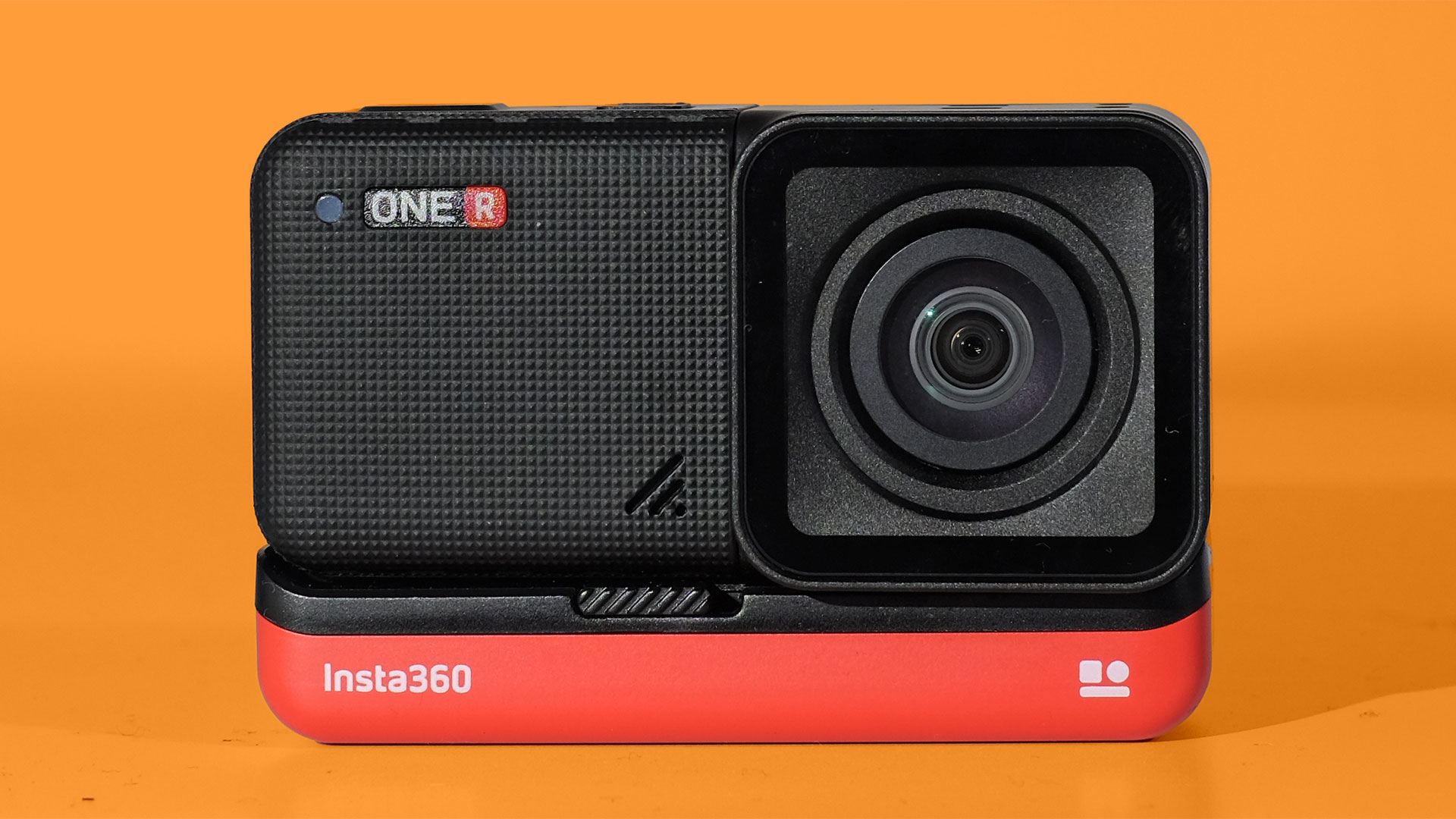
The Insta360 One R sitting in front of an orange background

(Image credit: Future)

9. Insta360 One R

An imperfect but impressive modular option with great quality

Weight: 130.5g | Waterproof: 5m (with case) | 5.7K video: up to 30fps | 4K: up to 30fps | 1080: up to 200fps | Stills resolution: 18.5MP | Battery: 1150mAh

Modular design offers unrivaled versatility
Solid 4K and 360-degree image quality
Very small screen
Significant bugs at launch

The GoPro Hero 9 Black may offer handy add-ons, but the Insta360 One R is a properly modular action camera, comprised of a battery, control and camera block. This means you can switch the latter at will to suit your shooting situation, choosing between a 4K action cam and a 360-degree camera. There's even a 1-inch sensor block (see the Insta360 One R 1-Inch Edition at number 2). But does this base model deliver on its promise of being three cameras in one? In many ways, yes: clipped together, the One R is only slightly larger than the Hero 8 Black and feels surprisingly sturdy – though you need to fit the mounting case to make it water resistant. Image quality is also sharp and relatively stable, with good detail in darker areas. 

In other ways, though, it's less successful: the image processing (at least on the 4K module) can't match the Hero 8 Black or Hero 9 Black, while the 1.3-inch touchscreen is too small for framing 16:9 footage. It’s worth remembering, though, that the dual-lens bundle costs less than the GoPro Max alone. For that, you get a modular approach that’s flexible and well-executed, delivering great 4K video and solid 360-degree footage. Provided software updates can iron out some of the processing issues, the Insta360 One R is well worth a look for those who want to tinker with both 360 video and standard action cam footage.

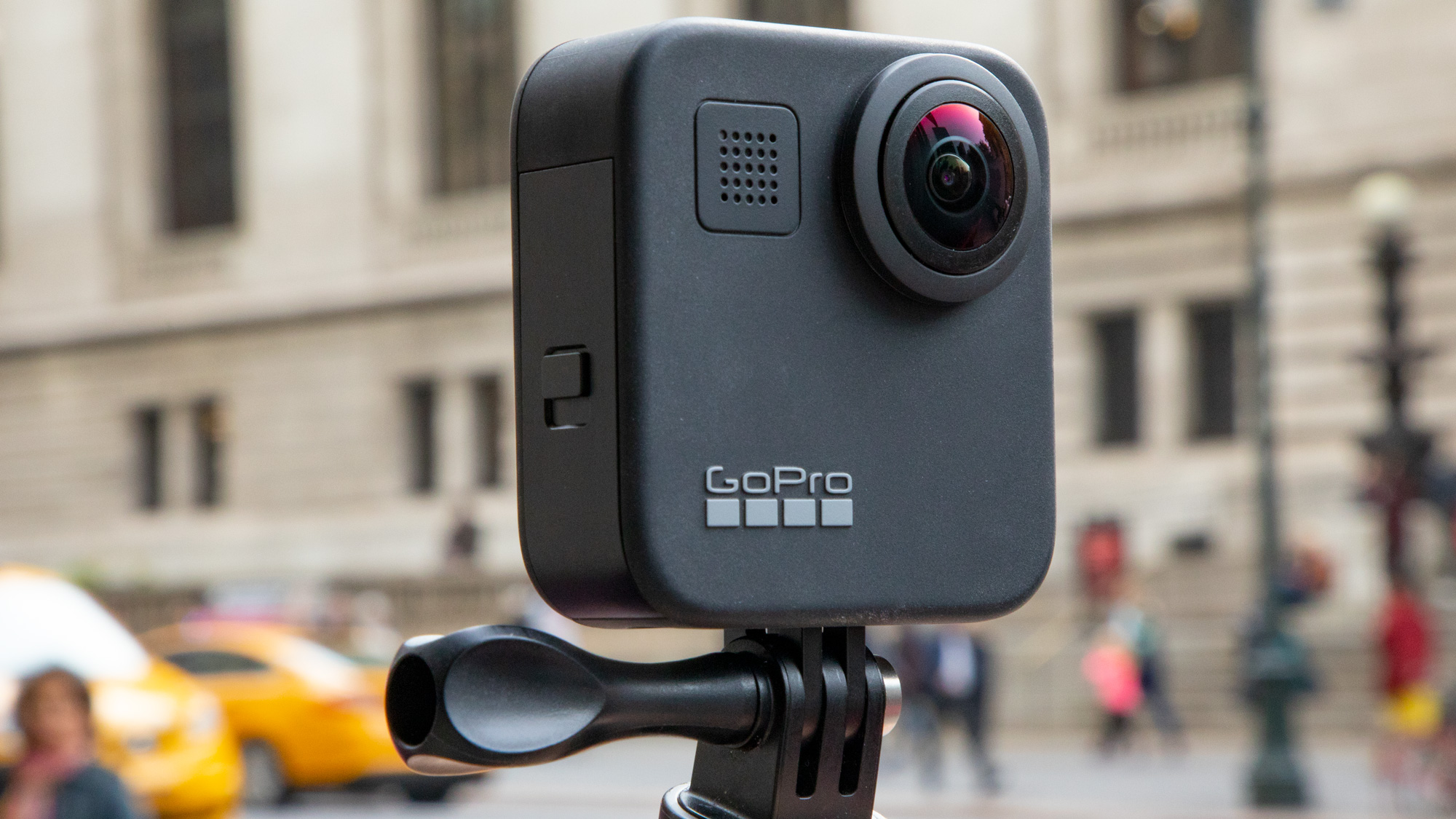
The GoPro Max mounted on a tripod on a busy street

(Image credit: TechRadar)

10. GoPro Max

The best waterproof, 360-degree action camera

Weight: 163g | Waterproof: 5m | 5.6K spherical video: Up to 30fps | 1440p 2D video : up to 60fps | Stills resolution: 16.6MP | Battery life: 108 minutes (1440p), 78 minutes (5.6K)

Shoots 5.6K, 360-degree video
In-camera stitching
Low-resolution 2D footage
Not the best in low light

If you only want to shoot traditional action camera footage (that is, non-360 video) at the best possible quality, then the GoPro Hero 8 Black and Hero 9 Black remain better choices. But if you like the sound of being able to reframe your videos after they've been shot, and are looking for great audio quality, then the Max is well worth considering.

GoPro's most expensive action camera uses two fisheye lenses to shoot spherical 5.6K video, which you can later crop into standard 2D video using OverCapture software. It's also packed with features including six-microphone audio (which records excellent audio, if not quite up to the level of GoPro's 'shotgun mic' claims), shooting modes like TimeWarp, and built-in mounting fingers to ensure you don't need a extra mount mount to attach it to anything.

The downsides are the fact that it doesn't offer the best 2D video quality (due to the need to convert it from a fish-eye image, and the max 1440/60p resolution) and that it can't quite match the Hero 8 Black or Hero 9 Black in low light situations. But it remains the best waterproof, 360-degree action camera around.

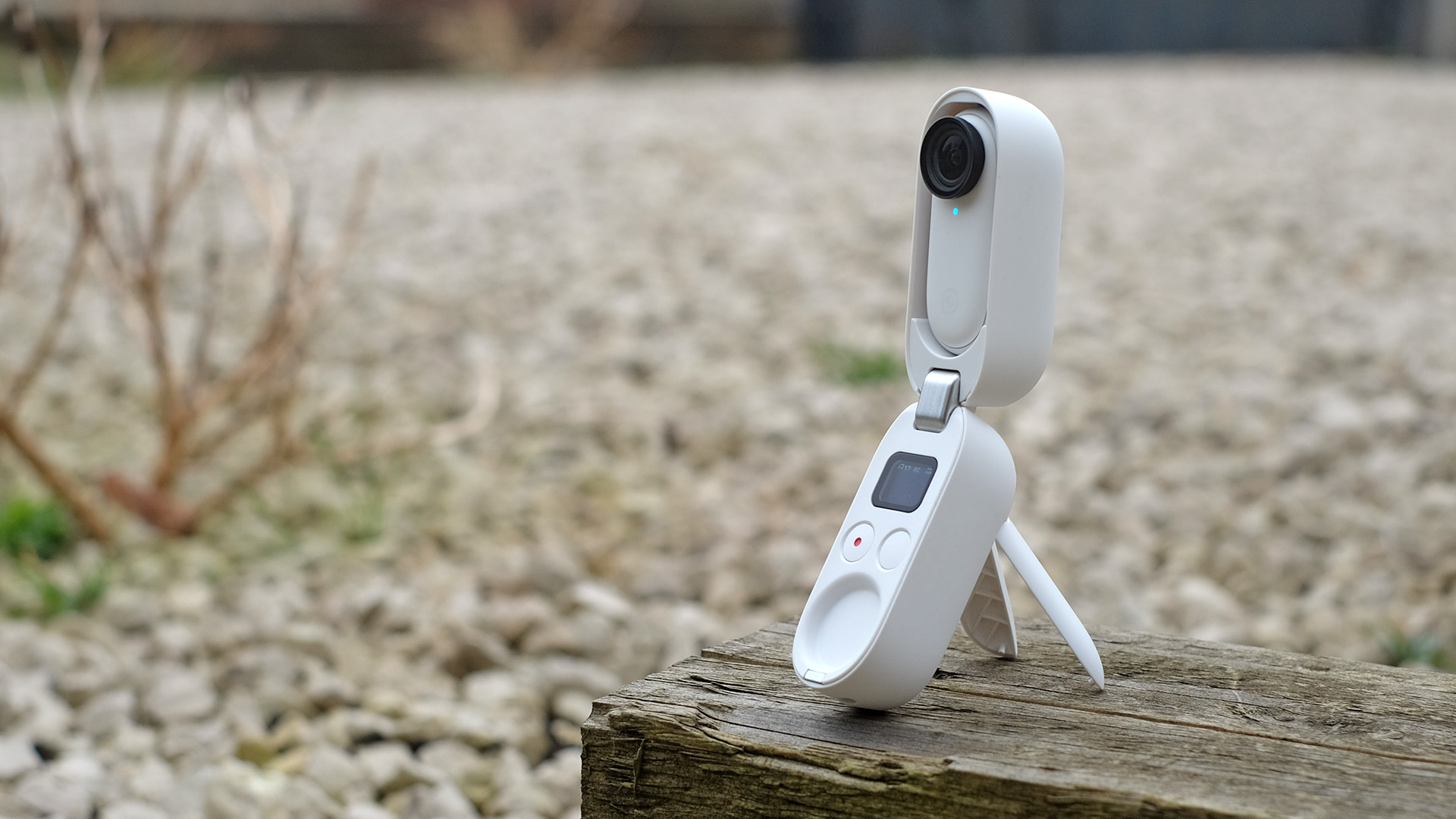
The Insta360 Go 2 sitting in its tripod charging case on a stone beach

(Image credit: Future)

11. Insta360 Go 2

A tiny action cam with a very clever case

Weight: 26.5g | Waterproof: 4m | 1440p video: up to 50fps | 1080p video: up to 50fps | Stills resolution: 9.2MP | Battery: 30 minutes (150 minutes with charging case)

Truly tiny form factor
Tripod charging case
No display for framing
Only waterproof to 4m

Touted as “the world’s smallest action camera”, the Insta360 Go 2 is a truly tiny cam that’s designed for quick and easy recording. Despite its dinky build, the Go 2 can capture excellent 1440p video at 50fps, with good detail and decent dynamic range. Its image stabilization skills aren’t a match for the GoPro Hero 9 Black, but the Go 2’s FlowState smarts can still smooth out walking motion reasonably well. 

Probably the biggest upgrade over the original Insta360 Go is the updated charging case. Buttons and a mini mode screen transform the user experience, allowing you to deploy the case as a remote control. It can also significantly boost battery life and double up as a tripod for easy self-shooting. Add 4-metre waterproofing to the spec sheet and, while it might not represent total innovation, the Go 2 shapes up as a versatile, accessible and properly portable action camera.

Image 1 of 2

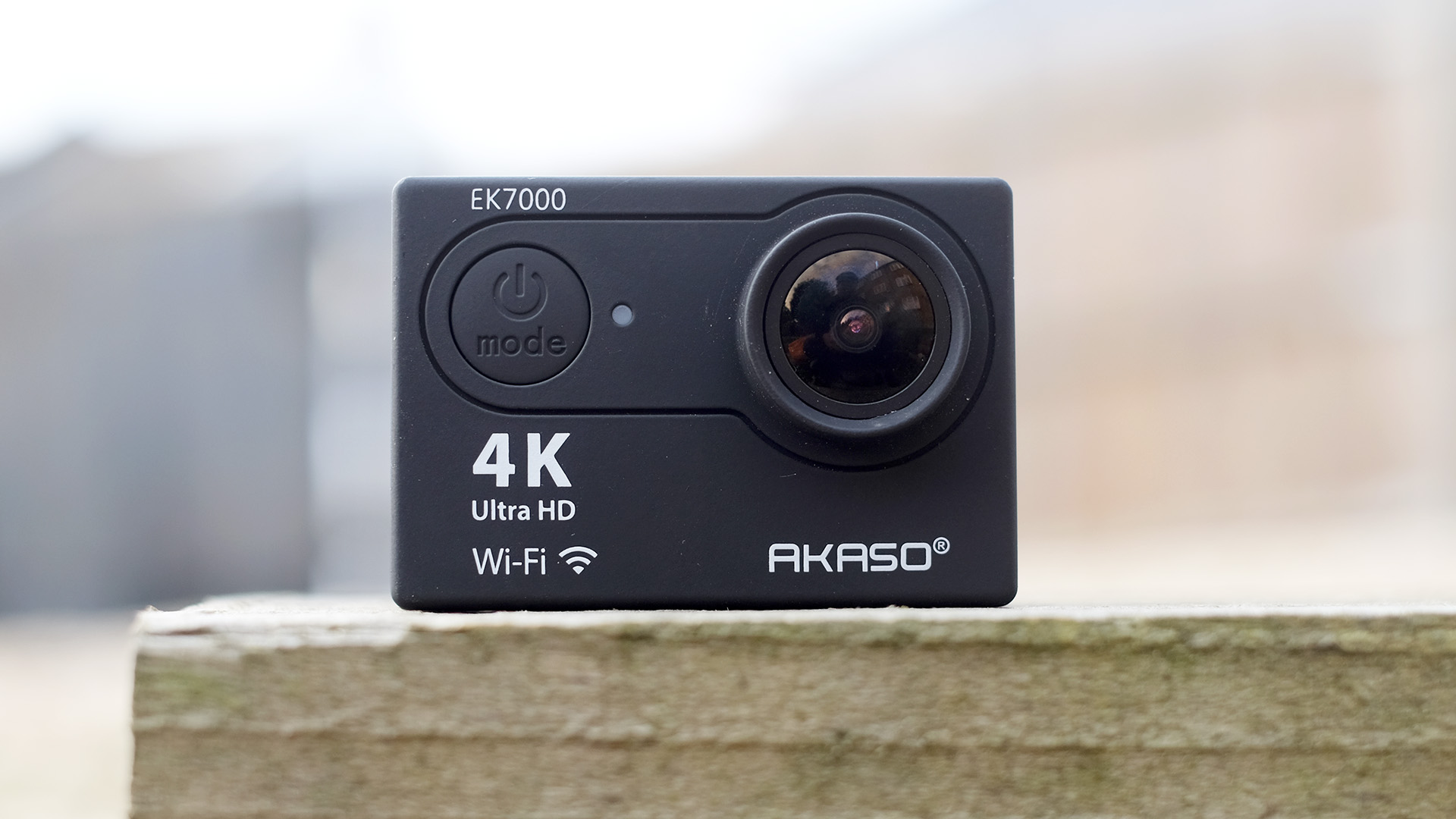
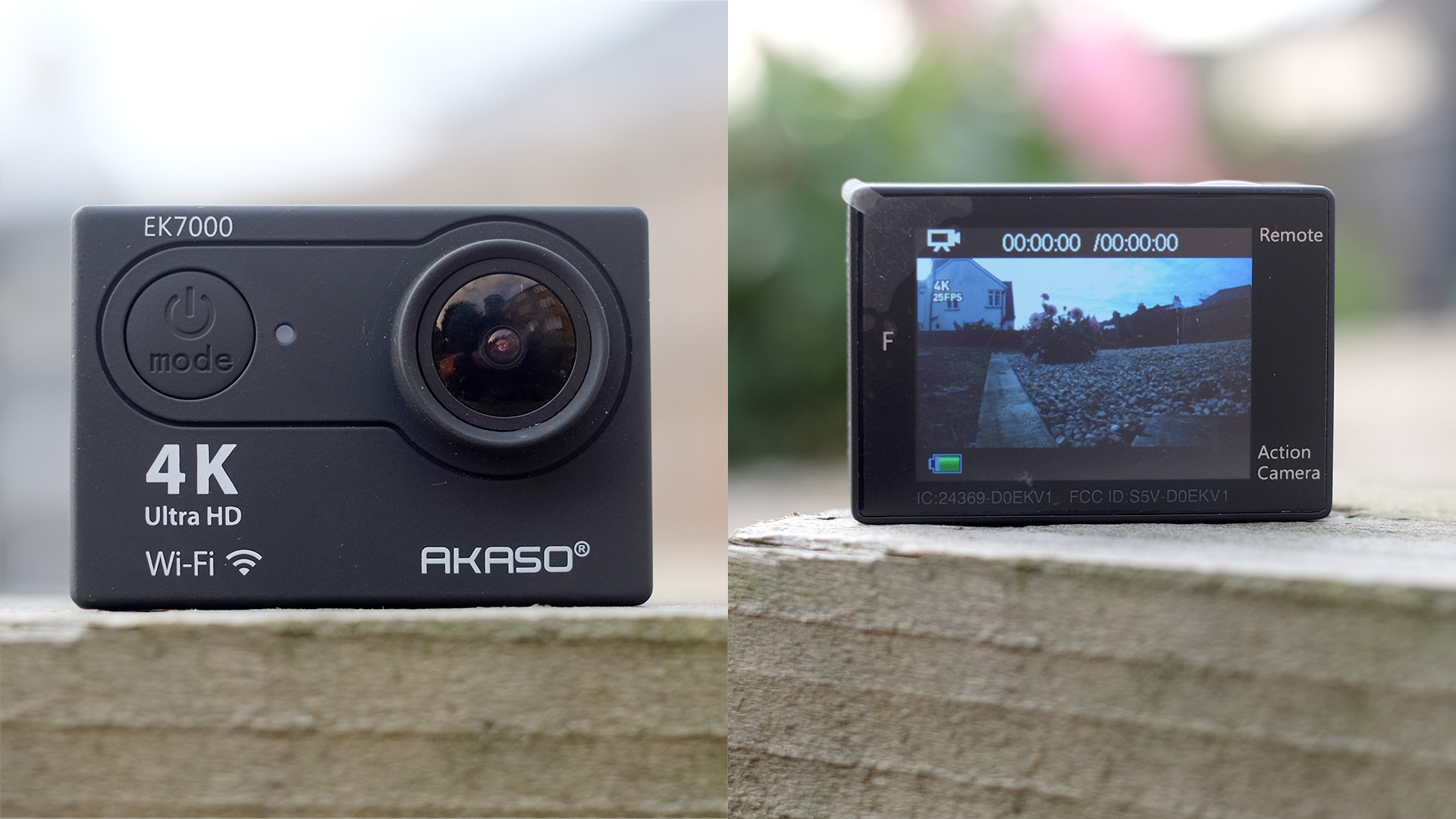
Akaso EK7000

(Image credit: Future)
Image 2 of 2

Akaso EK7000

(Image credit: Future)

12. Akaso EK7000

As good as you can get for the price

Weight: 59g | Waterproof: 30m (with a case) | 4K video: up to 25fps | 1080 video: up to 60fps | 720 video: up to 120fps | Stills resolution: 12MP | Battery life: 90 mins

Surprisingly good results at 1080/60p
Decent interface
Comes with lots of bundled accessories
4K motion sucks
No stabilisation at all

While the Apeman A100 (see no.4) remains our pick for the title of best cheap action camera, the EK7000 could well fit the bill if you need something that's even more affordable and shoots good 1080p footage. The downsides are that there's no stabilization here and you can't change your field of view from the native 'wide' angle. But it is relatively intuitive to use and the 1080p looks surprisingly decent when you consider the EK7000's rock-bottom price.

While it can shoot 4K/25p footage, this is very jerky – so we'd really only consider this to be a 2.7K or 1080p action camera. We did also certainly miss built-in electronic stabilization and audio quality isn't great. Still, if you need a very affordable helmet cam and can live with its limitations, there's no doubt the EK7000 offers incredible value.

Also consider...
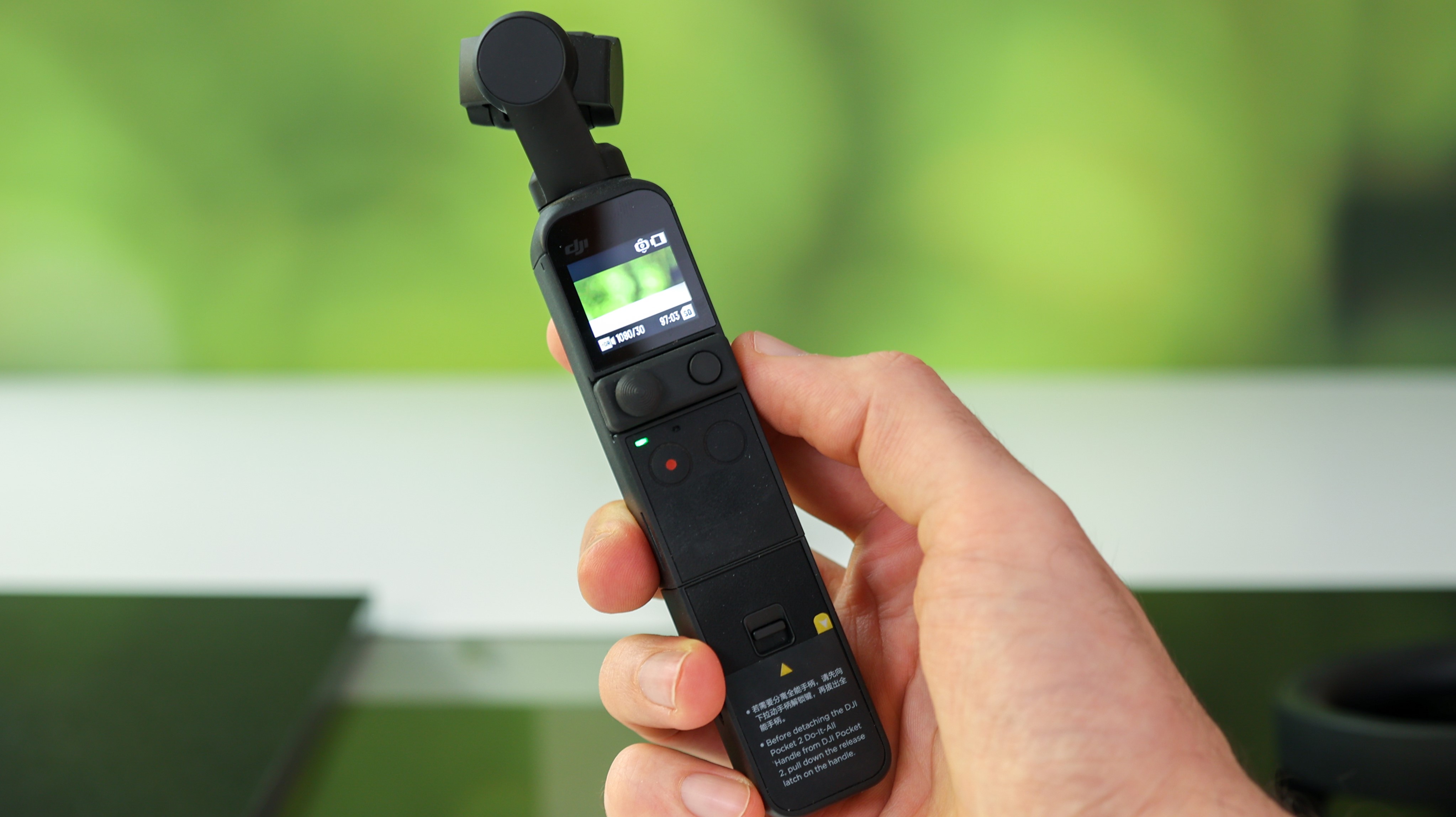
The DJI Pocket 2 being held in a hand with its screen turned on

(Image credit: Future)

DJI Pocket 2

What it lacks in ruggedness it makes up for with great stabilization

Type: Compact | Sensor size: 1/1.7-in | Resolution: 64MP | Effective focal length: 20mm | Viewfinder: None | Connectivity: Wi-Fi | Max movie resolution: 4K 60p | Size, weight: 124.7 x 38.1 x 30.0 mm, 117g

Useful gimbal stabilization
Impressive tracking
Poor low light performance
Can get hot while filming 4K

While it's not technically an action camera, the DJI Pocket 2 is well worth considering if you're a solo traveling filmmaker or vlogger. Its built-in three-axis gimbal isn't just useful for stabilizing footage – when combined with the Pocket 2's face-tracking, it allows the camera to automatically follow you left and right as you walk around in front of it.

Unlike the original Osmo Pocket, the Pocket 2 has a larger 1/1.7-inch sensor that can shoot 64MP stills and 4K/60p video at 100Mbps. Your options for capturing high-quality audio are also much-improved, thanks to the inclusion of four microphones and an optional Creator Combo that includes an external wireless mic. And while the Pocket 2 isn't waterproof itself, but you can buy a waterproof case that keeps it protected to depths of up to 60m.

The Pocket 2 isn't as rugged or tough out of the box as a GoPro, but it is a simpler and more versatile vlogging option if you're happy to keep it safely tucked away in between shots.

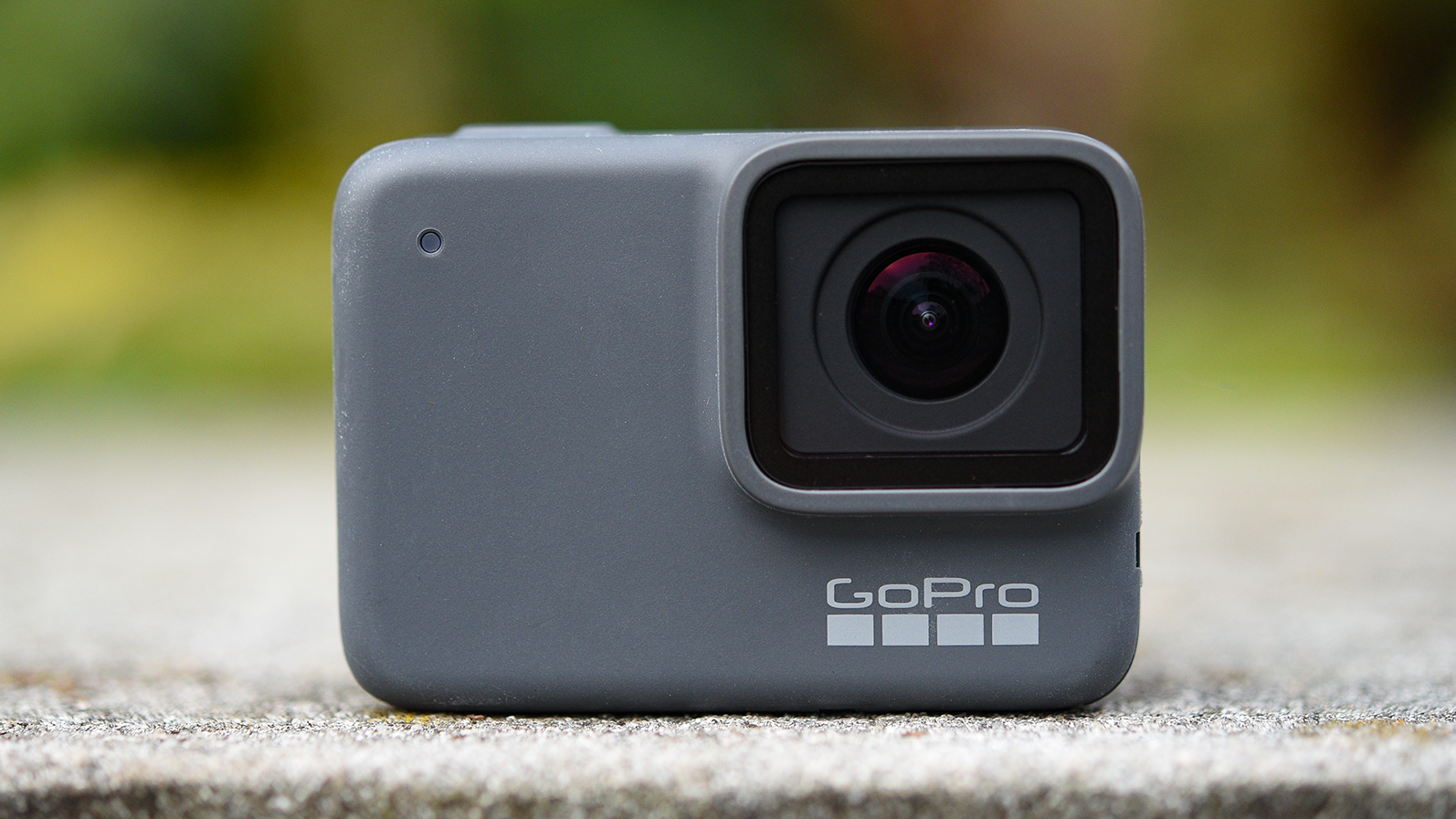
The GoPro Hero 7 Silver sitting on a stone patio

GoPro Hero 7 Silver

Officially discontinued, but still good value (if you can find it)

Weight: 118g | Waterproof: 10m | 4K video: Up to 30fps | 1080: up to 60fps | 720: up to 60fps | Stills resolution: 10MP | Battery life: 1-3hrs est

Pleasing 4K video quality
Easy to use
LCD can be unresponsive at times
Limited image capture control

Once GoPro's mid-range action camera when it launched in 2018, the Hero 7 Silver is now officially no longer in its lineup – though you can still buy it at increasingly tempting prices. Should you? If you're mainly looking for a point-and-shoot model with limited manual controls and decent 4K image quality, there's certainly a case for it. 

Like more recent GoPros, it's waterproof down to ten meters and offers both a 2-inch touchscreen and voice controls. Its video stabilization isn't quite as powerful as HyperSmooth and you can only shoot 4K/30p, rather than the 60fps offered by models from the Hero 7 Black up. But it remains a good-value option for beginners or those looking for a more basic action camera, if you can find it in stock.

Read our in-depth GoPro Hero 7 Silver review

What should I look for when buying an action camera?

While the right action camera for you will depend on what and how you like to shoot, there are some key skills every good action cam should have. It should be rugged enough to endure some rough and tumble, plus waterproof down to at least a few meters. It should also be straightforward to use and operate, even in extreme conditions. Touchscreens can make an action cam easier to control, but if you plan to shoot while wearing gloves, it might make more sense to select a model with physical buttons.

You’ll probably use an action cam on the move, so image stabilization is an important feature to look for. This should smooth out camera shake (from hands or handlebars) for more watchable footage. The quality of image stabilization can vary significantly, so it’s worth thinking about how smooth your video needs to be (or whether you can live with a few wobbles). A higher resolution sensor can help: digital image stabilization will often crop the frame to eliminate movement. Footage cropped from 4K will look better than video that’s been reduced down from 1080p.

Many of the top action cameras in 2021 also offer smartphone connectivity, which allows you to easily edit and share your latest videos quickly. Some models also support live-streaming direct to platforms like YouTube. This can be demanding on battery life, but will be useful if you plan on vlogging straight to social media.

Most action cameras can shoot slow-motion footage at upwards of 120fps, while some of the top models also offer more creative shooting modes, such as hyperlapses. Some in-camera effects can be replicated with editing software, but it’s worth considering a camera with creative presets if you’re looking to add variety to your videos with minimal effort. 

The majority of models ship with a range of mounting options. If you’re planning to use one during a more niche activity, be sure to check that there’s a suitable attachment available to fit your needs. A few action cams go further, offering a modular setup which allows you to augment your shooting with optional accessories, such as microphones, lights or even a 360-degree lens.

What is an action camera used for?

The best action cameras are compact, tough and easy to operate. Thanks to their rugged build, action cams can be used to shoot footage in the kind of scenarios where most standard cameras simply can’t survive. And because the top options offer outstanding image stabilization, action cams are ideal for recording smooth video while you’re on the move.

Many people use action cameras to capture footage of their adventurous pursuits, such as mountain biking, skydiving or snowboarding. The best action cams are also waterproof, so some outdoor enthusiasts employ them to shoot watersports or record underwater video while swimming or diving. Most action cams come with a range of mounts, which make it easy to attach them to your helmet, handlebars or even a strap which wraps around your chest. So you should always be able to find an attachment that suits.

Action cameras can also be fitted inside vehicles, either to record the road like a substitute dash cam, or to capture what the driver is doing. Several motorsport series fit in-car action cameras to record racing drivers.

Not everyone uses action cameras for extreme activities, though. Because the best models are easy to control, feature creative shooting modes and offer excellent connectivity options (including live-streaming support), a lot of vloggers use models like the GoPro Hero 10 Black to shoot videos for social media. Image stabilization means they’re great for walking and talking, while their compact size makes action cams good for on-the-go recording. 

Some content creators deploy action cams as a second camera alongside their main mirrorless model, for shooting slow-motion b-roll or capturing additional angles to add variety to their videos.

How we test action cameras

Action cameras are among the toughest cameras around, so we properly put them through their paces to make sure they live up to their rugged billing – and can shoot excellent video and stills, too.

We take each one through a range of real-world tests including cycling, swimming and, if possible, an experience like an adventure course. These not only give us a good idea of each model's ability to withstand the elements, but how easy they are to operate in difficult conditions.

When it comes to footage, we record in a variety of resolutions and frame-rates to help gauge each action camera's strengths, and review these clips on a calibrated monitor. We look at default color reproduction and noise levels in shadows and highlights, and look out for any common image quality issues including clipping, softness, barrel distortion and over-zealous processing.   

We go through a similar process to analyze each camera's image stabilization, which is crucial to maintaining image quality during movement, and look at the quality of any special shooting modes too, including slo-mo and timelapses.

For battery life tests, we continuously record at different resolutions and frame-rates. We note down both how long the action cams lasts and when it has to shut down due to overheating. Lastly, we evaluate how user-friendly each camera is, by testing both their touchscreen interfaces and companion apps.


from TechRadar: Photography & video capture news https://ift.tt/3l8ZBsF
via IFTTT
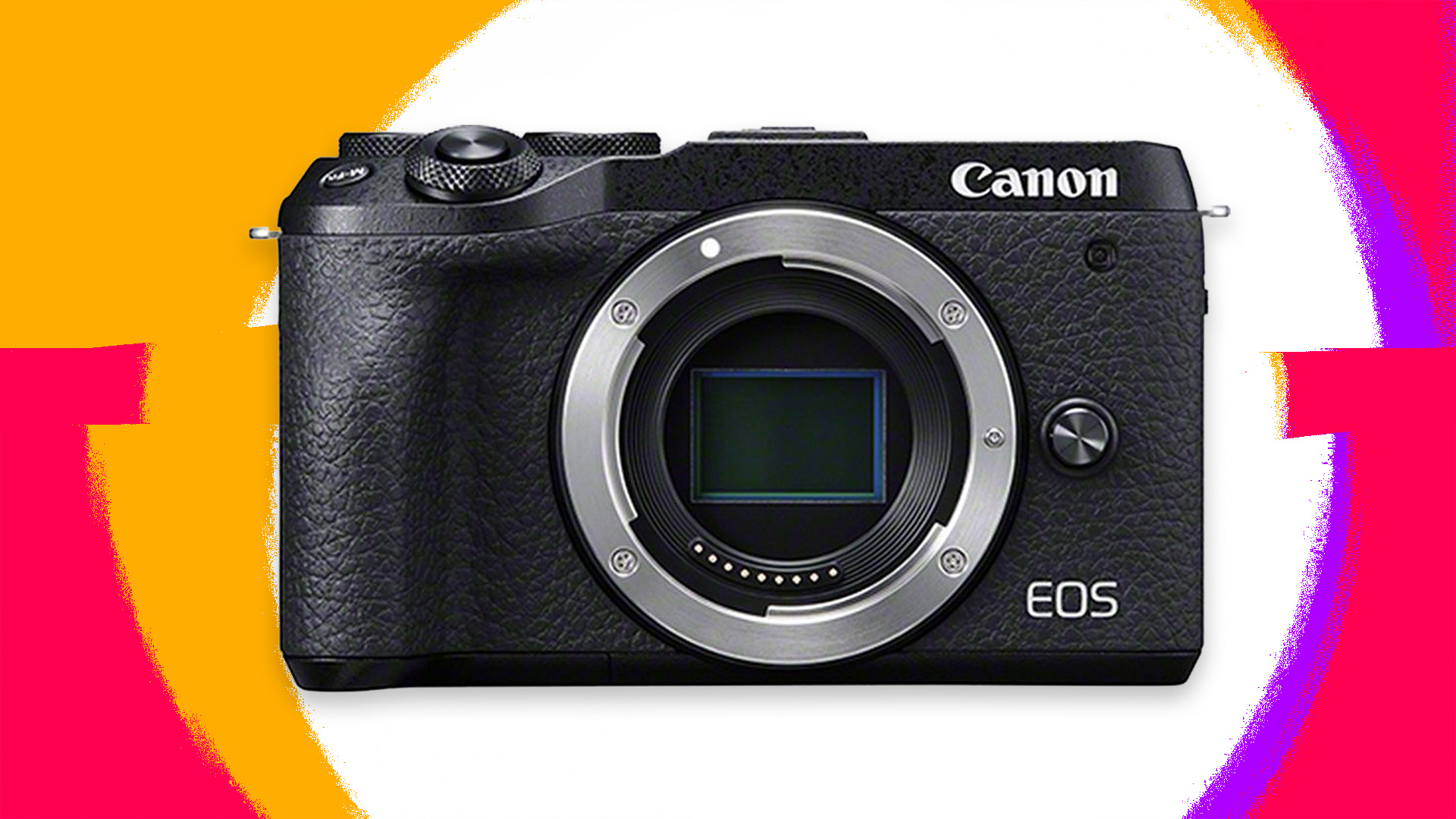
Unleash your vlogging creativity with the Sony ZV-E10 camera

Techradar:

Whether you’re taking stunning landscape photos, filming a travel vlog, or an unboxing, it can be challenging to frame and shoot the perfect shot without struggling with extra equipment and settings on your own. Thankfully, the Sony ZV-E10 camera is here to tackle all of your filming problems, leaving you to focus on creating content that really stands out.

The Sony ZV-E10 is the first vlog camera with interchangeable lenses, which allows you to choose the best lens that suits the content you’re trying to create. With over 60 lenses to choose from, there’s a perfect lens for every situation. For example, if you’re filming a vlog, you’ll want to opt for a wide-angle lens to capture not only yourself, but also your surroundings to make for an immersive viewing experience. When filming far away objects, a telephoto lens lets you smoothly zoom in and out on subjects, while keeping everything in sharp focus. This can also add a dynamic element to your video with no extra editing required.

Special filming effects like slow-motion and background blur usually require either a special lens or manual adjustments before you’re ready to film. On the ZV-E10, these are easily done with just a tap of a button. You can instantly shoot slow-motion video at up to four times slower than real time, or switch to quick motion shooting that’s over sixty times faster. These can be shot without any post-editing, with clear, Full-HD quality.

If you enjoy creating unboxing videos and product reviews, the ZV-E10 is a perfect sidekick. When the Product Showcase Setting is activated, the camera will quickly and automatically shift focus from your face to a product held in front of the camera, without the need to place your hand behind the product to shift the focus to it. The ZV-E10 is then able to quickly focus back on your face when you’re done, all without having to stop to manually change focus settings.

When shooting other subjects in front of the camera, real-time Eye AF provides continuous eye tracking when shooting portraits in motion. Even fast-moving objects are kept in focus, thanks to the ZV-E10’s sophisticated AI-based subject recognition tracking algorithms.

The ZV-E10's impressive images are the result of the camera's large APS-C sized image sensor – the same kind found in cameras all the way up to professional cinema models. The sensor is more than ten times larger than what you would find in a typical smartphone, so it collects far more light and more image data, to create beautiful images. From shooting in 4K, dim lighting, or macro shots, the ZV-E10 handles it all with ease.

Audio capture is always a concern when vlogging, and here too the Sony ZV-E10 helps take care of things. The internal Directional 3-Capsule Mic is optimised to capture sound from in front of the camera, recording your voice clearly even when you're in a crowd. The included wind screen helps reduces wind noise when you're shooting outdoors, so you won't have to adjust noise levels after shooting.

The ZV-E10's battery provides up to 125 minutes of continuous movie shooting or up to 440 still images, so you can comfortably shoot long sessions outdoors. It can also be powered by compatible power banks via the USB-C connector, or plugged into an AC power outlet for longer sessions. You can even use the ZV-E10 for live streaming on your PC or smartphone, and take advantage of its advanced features for crisp video. You can also wirelessly transfer photos and videos directly from the ZV-E10 to your smartphone for instant editing and uploading on social media.

When it comes to endless creative options for your videos and images, the Sony ZV-E10 stands out as the perfect choice to meet your needs. It helps you make professional-looking videos with just a few button taps, leaving you with more time to capture the moments that matter, and less time spent on editing videos in post. With a world of creative possibilities at your fingertips, there’s no better camera to choose from than the Sony ZV-E10.


from TechRadar: Photography & video capture news https://ift.tt/3zV9CRF
via IFTTT

Fresh Canon EOS R7 rumors suggest affordable RF cameras are en route

Techradar:

Now that Canon has finally launched its Canon EOS R3 powerhouse, it seems the camera giant may now be taking pity on our bank accounts and switching its attention to the more affordable RF cameras – including the long-awaited Canon EOS R7.

The ever-reliable Nokishita has spotted that two new unreleased cameras have been registered with what appear to be Russian certification bodies. This doesn't usually point to an imminent launch, but suggests that the products are in the pipeline for 2022.

The certifications sadly don't contain any specific info like Wi-Fi radios that could hint at what kind of cameras Canon has in store, but separate speculation from Canon Rumors has given more credence to the idea that APS-C RF bodies are en route.

Canon Rumors says that it's "now been told by a good source that Canon will definitely be bringing an APS-C RF mount camera equipped with a backside-illuminated sensor in the second half of 2022".

This APS-C sensor, which is expected to have a resolution between 28MP-32MP, will apparently be backside-illuminated and "appear in more than one camera". It's not clear whether or not these rumors are linked to the registrations spotted by Nokishita, but given those two leaked models have similar product codes ('DS126841' and 'DS126842') it certainly seems a possibility.

The arrival of a Canon RF camera, like the rumored Canon EOS R7, would be significant for two reasons. Firstly, all current RF bodies have larger full-frame sensors, which means they're aimed at advanced shooters. Cameras with APS-C sensors are generally more affordable and designed for hobbyists. And secondly, it would mean the end of Canon's current EOS-M system, which have an older EF-M mount that was spun off from its DSLRs.

Back in June, we saw rumors that Canon is preparing to launch as many as three RF cameras with APS-C sensors, including the Canon EOS R7, a vlogger-friendly version called the Canon EOS R8, and an entry-level body called the Canon EOS R9. If true, it might be a while until we see all of those arrive, but these latest scraps of evidence do suggest that 2022 could be the year of more affordable Canon RF cameras. 

Analysis: Evidence grows Canon RF cameras with APS-C sensors

The Canon EOS M6 Mark II mirrorless camera without a lens

(Image credit: Future)

There has been no official confirmation that Canon is working on RF-mount cameras with APS-C sensor, but the evidence is certainly growing that this could be the case.

Firstly, Canon Rumors has a pretty good track record with information that comes from its "known sources", and it's been pretty unequivocal that Canon will "definitely" be launching an APS-C RF mount camera next year.

But there has also recently been a lot of indirect evidence pointing towards the same conclusion. Canon recently launched two affordable RF-mount lenses and was keen to stress that one of them, the Canon RF 16mm f/2.8 STM ($299 / £319 / AU$549), converts to a very useful 25.6mm focal length when used in APS-C crop mode.

The launch of the disappointing Canon EOS M50 Mark II back in October 2020 also appeared to signal that Canon was shifting its focus away from its EOS M line (which also have APS-C sensors). That camera was a barely reheated version of its predecessor, and felt very much like a placeholder while Canon concentrated on its newer RF mount.

In the past couple of years, Canon has focused on making its RF bodies and lenses a comfortable home for professionals, particularly those looking to switch from older DSLRs. But while the hobbyist camera market has shrunk in recent years, photographers and vloggers would certainly be keen to see more affordable mirrorless options from the camera giant.

The only question is exactly how soon RF-mount cameras with APS-C sensors will arrive. The two registered cameras spotted by Nokishita are prime candidates for the launches that Canon Rumors has predicted for January 2022 and March/April 2022, but the first APS-C RF camera isn't expected until the second half of 2022. Either way, it could be worth the wait for those who've been waiting for sub-$1,000/£1,000 Canon RF cameras. 


from TechRadar: Photography & video capture news https://ift.tt/3F4HPlG
via IFTTT

keskiviikko 29. syyskuuta 2021

Imaging recource: Exposure X7 announced: All-in-one photo editor includes improved masking, workspaces and more

Exposure Software, previously known as Alien Skin, has announced the newest release of its flagship photo editing software, Exposure X7. Exposure X7 can be used as a standalone application or as a plug-in for Photoshop and Lightroom Classic. When used as a standalone app, it's a full one-stop solution for your photography workflow, with organization, editing, watermarking and printing tools. Unlike Lightroom, Exposure X7 doesn't include a catalog, however. You simply point the software at where your photos are stored, and you can...
(read more)

from Imaging Resource News Page https://ift.tt/3m4t6OO
via IFTTT

Lightroom is getting these powerful Photoshop tools on desktop and mobile

Techradar:

If you regularly use Lightroom to polish your photos, you'll likely have been equal parts impressed and frustrated by its editing tools – but Adobe is promising to make selective tweaking a lot easier with a big update that's coming soon.

From October 26th, Lightroom will be getting some long overdue masking tools that will bring some of the AI-powered tricks we've recently seen added to Photoshop (like Sky Replacement) to its popular photo editor and organizer. These upgrades will come to Lightroom, Lightroom Classic and Adobe Camera Raw.

The changes promise to make choosing specific parts of your photo – like a person, or the sky – a one-click affair, which should make it far easier to, for example, fix overexposed parts of a photo or make more granular tweaks.

The new changes will be found in the panel below Lightroom's histogram. Instead of the brush and gradient buttons, there will be a new 'masking' button – this contains all of Lightroom's masking options, including the new 'select subject' and 'select sky' options.

What's particularly interesting about Lightroom's new approach, which Adobe says is the biggest upgrade to its selective enhancements since Lightroom 2 in 2008, is that you can effectively layer extra masks on top of ones you've chosen. This isn't a full Photoshop-style layers approach, but it's a welcome taste of it.

The example given by Adobe below shows how quickly it now is to choose the background (by inverting the 'select subject' mask), then remove the sky from that selection. This means you can quickly adjust the exposure, shadows and contrast in the ground and background, without affecting other parts of the image.

While this may sound like a relatively minor boost to Lightroom's editing options, Adobe says it involved overhauling the program's image processing engine over a year-and-a-half. This process has apparently meant that Adobe has "some fun new tech brewing" that it'll be releasing sometime next year. For now, though, its new tools will help it keep pace with its more nimble rivals like Luminar and Affinity Photo.

Analysis: Welcome tools for speedier photo edits

For a long time, Lightroom has lacked the traditional masking tools that we've seen in Photoshop. Instead, photographers have tended to use a combination of local adjustment tools and range masks to choose particular parts of a photo to edit.

The previous existence of those tools mean that Lightroom's new features will feel more like an added convenience than a revolution to keen users of the program. 

For example, Lightroom's 'auto mask' tool has been on hand to help you choose particular parts of a photo, while the very useful luminance range mask is a popular way to choose specific areas to adjust based on a defined level of brightness.

But there's no doubt that the one-click selection of subjects and the sky, if they do indeed work as flawlessly as Adobe's demo, will help speed up many photographers' editing workflows.

Even better, Adobe has said that many users have requested that the Lightroom experience is consistent across desktop and the mobile app, which has apparently meant that the "AI-powered tools work on mobile devices equally as well as on desktop". This includes the color range masks that were previously only available on the desktop app.

We're looking forward to taking all of the new tools for a spin from October 26th to see if Lightroom can move up the pecking order of our guide to the best photo editing apps.


from TechRadar: Photography & video capture news https://ift.tt/3zMkdy5
via IFTTT

tiistai 28. syyskuuta 2021

Imaging recource: Sony ZV-E10 First Shots: Sony’s compact APS-C vlogger-friendly hybrid camera hits our testing lab

Click here to browse our Sony ZV-E10 First Shots Back in the summer, Sony debuted its second "ZV" video-centric camera aimed at vloggers, the ZV-E10. The ZV-E10 follows up on the ZV-1, which is essentially an RX100-series camera with a more video-focused design and feature-set. Like its RX100 companions, the ZV-1 sports a fixed zoom lens and a 1-inch-type stacked CMOS sensor. This newer Sony ZV-E10, on the other hand, takes after Sony's popular A6XXX-series Alpha mirrorless cameras, offering interchangeable lens versatility as...
(read more)

from Imaging Resource News Page https://ift.tt/3F2kAZq
via IFTTT

Imaging recource: Adobe reveals redesigned masking and selective adjustment tools for Camera Raw and Lightroom

The Adobe Camera RAW (ACR) team has announced a 'completely redesigned and reimagined way to mask selective adjustments in Adobe Camera RAW, Lightroom and Lightroom Classic that we now collectively refer to as masking.' The new masking tools will be available in ACR, Lightroom (on desktop and mobile) and Lightroom Classic on October 26. Josh Bury of Adobe writes, 'Selectively adjusting certain areas of a photo differently than other areas is a technique that's nearly as old as photography itself.' Early versions of Photoshop...
(read more)

from Imaging Resource News Page https://ift.tt/3zMKr3t
via IFTTT

The Pixii Camera has ideas that other mirrorless cameras could learn from

Techradar:

The original Pixii Camera was a fresh take on the digital rangefinder camera when it arrived in 2018, and now its French maker has announced an intriguing successor.

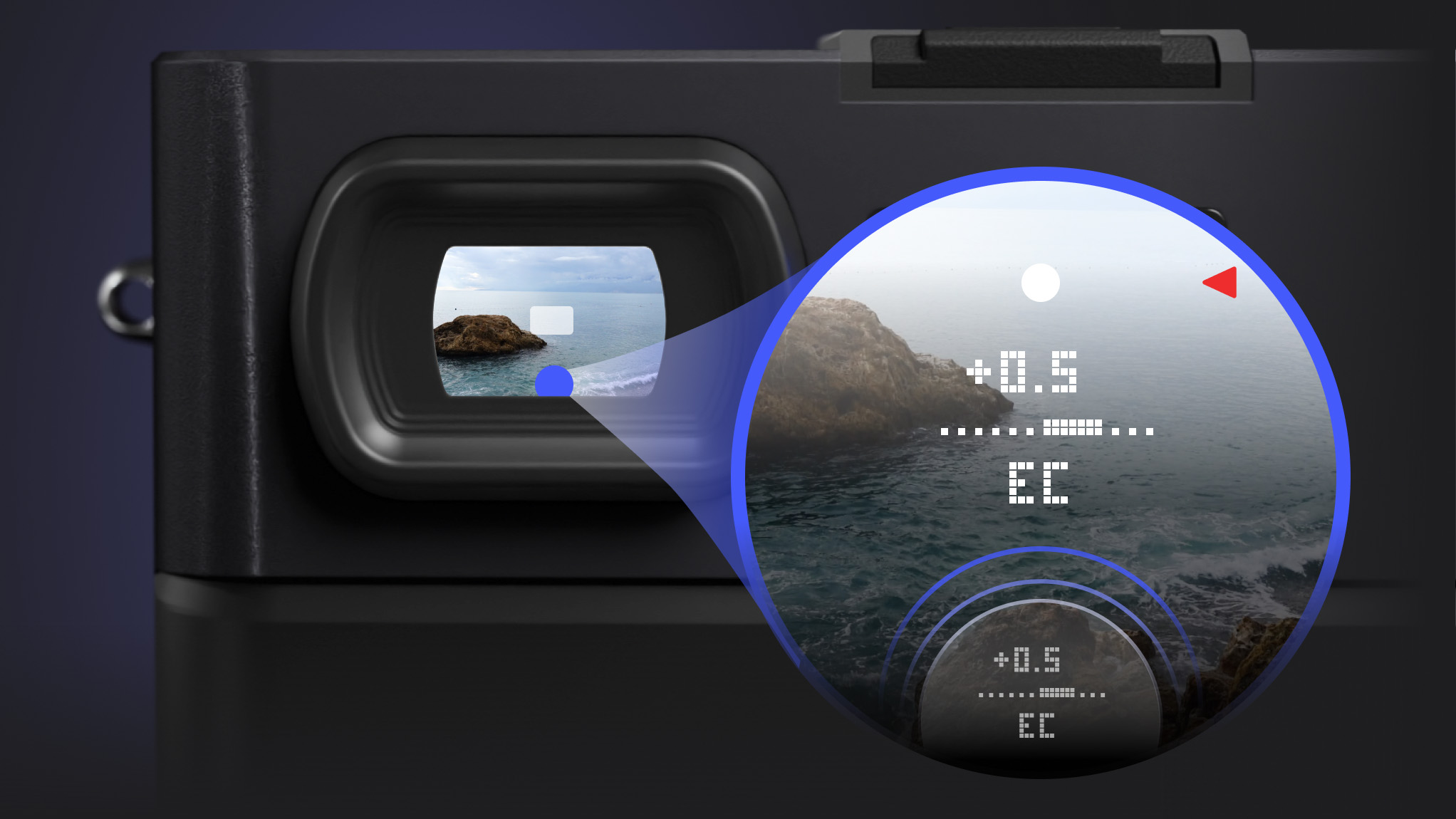
Also called the Pixii Camera, the second-generation version brings a new 26MP APS-C sensor (up from the slightly paltry 11MP sensor in its predecessor) and a new 'interactive viewfinder'.

The latter isn't a modern EVF, instead combining a traditional optical viewfinder with projected electronic info like your settings, which you can tweak from within the viewfinder. We've seen hybrid viewfinders before on cameras like the Fujifilm X-Pro 3, but none quite like this one. 

The Pixii Camera is a slightly odd mix of old and new in others ways, too. It's compatible with Leica M-mount lenses, which date back to the 1950s and are generally small, lightweight and very expensive. Focusing and aperture control are also still manual-only.

But it also brings a few features that we'd like to see embraced by the traditional camera giants like Canon, Nikon and Sony. The Pixii offers internal storage – you can choose between 32GB, 64GB and 128GB versions, with the latter being enough for 3,650 DNG files.

Like its predecessor, the camera also instantly sends a preview of the photo you've just taken to your iOS or Android phone, via Bluetooth 5. You then get the option of importing the full DNG raw file and editing it before sharing on social media.

Some more standard upgrades include USB-C connectivity and an expanded ISO range, which has moved up from the modest ISO100-6400 of the first version to 160-12,800. 

You'll be able to pre-order the Pixii Camera from September 30 from $2,999 (around £2,590 / AU$4,840) for the basic version without internal storage, with orders expected to ship from October 11. There's quite a markup for the 128GB version, though, which will cost $3,540 (around £3,055 / AU$5,715).

Analysis: A stylish mix of old and new  

Image 1 of 2

The viewfinder of the Pixii Camera

(Image credit: Pixii)
Image 2 of 2

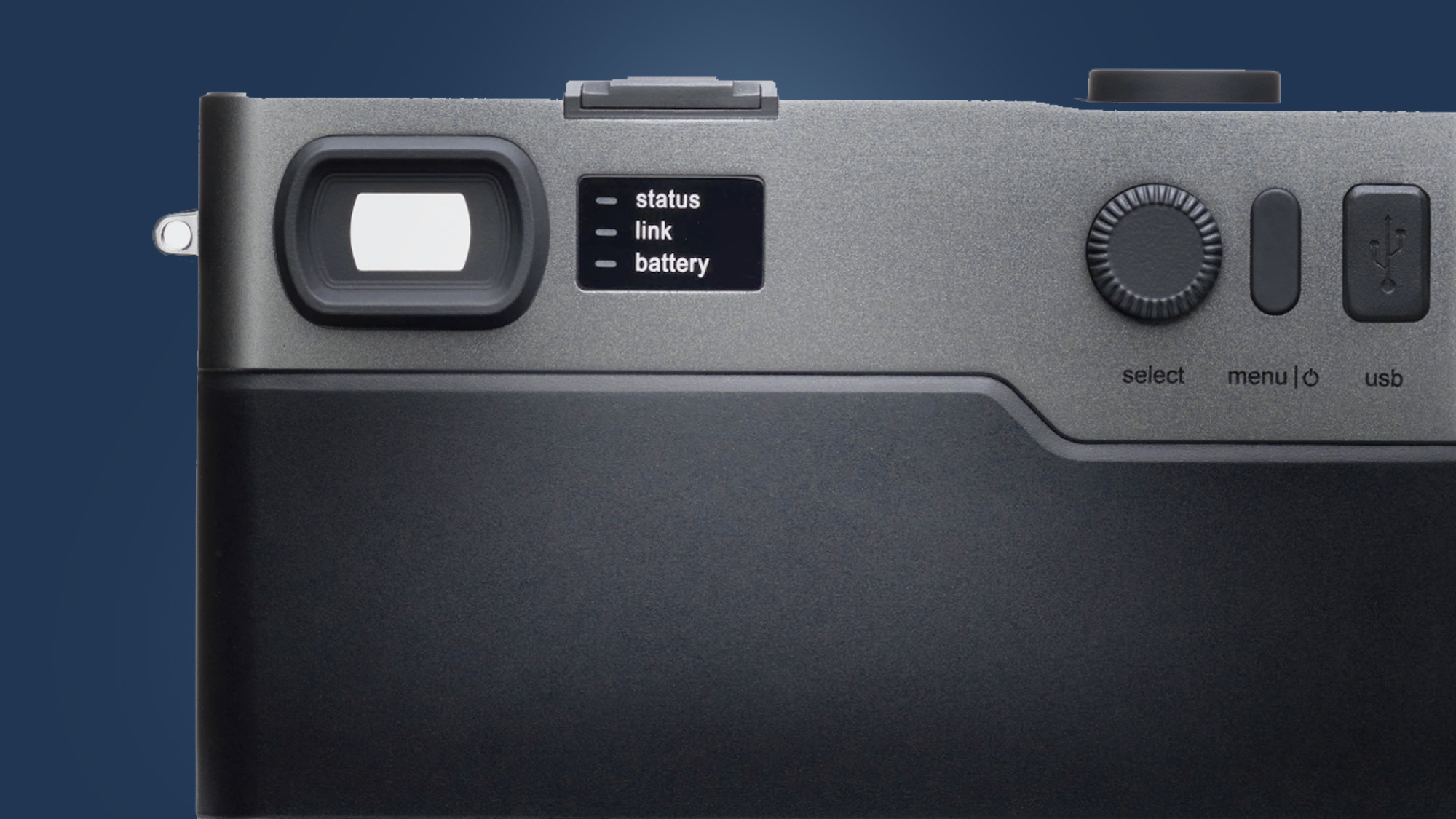
The back panel and viewfinder of the Pixii Camera

(Image credit: Pixii)

The Pixii Camera's price tag and Leica M-mount make it a pretty niche camera, but it also packs some fresh, mainstream-friendly ideas that we'd like to see on other cameras.

Like smartphones, you can buy it with a generous amount of internal storage (up to 128GB). An even better scenario would be the combination of an internal SSD with a memory card slot, so you could upgrade it and spread the risk across cards. But the inclusion of built-in storage certainly feels very modern and streamlined compared to most of today's mirrorless cameras.

We also like the sound of its instant photo previews for smartphones, which pop up immediately after you've pressed the shutter. The companion apps from traditional manufacturers vary greatly in quality, with Fujifilm's being particularly dated, so we certainly like the look of the Pixii Camera's app.

That said, the camera's lack of any rear screen means the app is doing some pretty heavy lifting, and the 'interactive optical viewfinder' – while certainly unique – is still a lot more niche than a standard EVF, which gives you a full preview of the shot you're about to take.

We're all for bolshy new players in the somewhat staid camera market, though, and the Pixii Camera joins the Alice Camera in being another intriguing take on the screen-less mirrorless camera.


from TechRadar: Photography & video capture news https://ift.tt/3ihnXSp
via IFTTT

Imaging recource: Love Hasselblad and have $15,100? The new, stylish limited edition 907X Anniversary Edition Kit is for you

Hasselblad released its first camera, the HK-7, 80 years ago. To celebrate the anniversary, Hasselblad has unveiled the 907X Anniversary Edition Kit. The 907X Anniversary Edition Kit will be limited to 800 units worldwide and draws inspiration from the iconic SWC camera. The 907X Anniversary Edition (AE) features an anodized Lunar Grey trim and lens and a black leatherette cover. Hasselblad writes, 'By casting this classic in a new light, Hasselblad celebrates a remarkable journey and a continued spirit of innovation.' Looking...
(read more)

from Imaging Resource News Page https://ift.tt/3F1KBb6
via IFTTT

Imaging recource: Is the era of DSLR cameras coming to an end?

Wes Pitts, editorial director, Outdoor Photographer: Earlier this year, Sony quietly discontinued its last DSLR models. The newest of those models, the a99 II, was introduced in 2016. As one of the leading brands in the transition to mirrorless cameras, that's not necessarily a surprising move by Sony, but it's among the indicators that the days of traditional DSLRs are coming to an end. The Sony A99 II, Sony's last A-mount SLT camera, debuted back in 2016. As we began work on our 2021 Editors' Picks awards for Outdoor Photographer...
(read more)

from Imaging Resource News Page https://ift.tt/3ugJhw6
via IFTTT

maanantai 27. syyskuuta 2021

Imaging recource: The Nature Conservancy 2021 Photo Contest winners announced

The Nature Conservancy has unveiled the winners of its 2021 Photo Contest. As expected, there are many beautiful photos of a diverse range of subjects, including landscapes, nature and wildlife. After a one-year hiatus due to the COVID-19 pandemic, this year's edition of the contest drew just over 100,000 photo submissions from a record-breaking 158 countries. This year's winning photos were selected by a panel of judges, including singer-songwriter Ben Folds, who is himself a seasoned photographer. UK photographer Anup Shah...
(read more)

from Imaging Resource News Page https://ift.tt/3m23guW
via IFTTT

Imaging recource: Pixii announces new 26MP digital rangefinder camera with M-mount

In 2018, French startup Pixii announced a digital rangefinder camera, the Pixii camera. The machined aluminum camera includes an M-mount, 12MP APS-C image sensor and no back display. Although first announced in 2018, the Pixii camera didn't go on sale until mid-2020. Pixii has announced a new version of its camera featuring the same overall design but a new 26MP image sensor and a few other improvements. The Pixii camera features a relatively simple design. The back of the camera includes a select wheel, menu button and USB port...
(read more)

from Imaging Resource News Page https://ift.tt/2Y82sfT
via IFTTT

perjantai 24. syyskuuta 2021

Imaging recource: Nikon Z fc Hands-on Review: Is Nikon’s stylish new camera more than a pretty face?

Click here to read our Nikon Z fc Hands-on Review The Nikon Z fc is Nikon's latest DX-format Z camera, and it blends the past and present in a way unlike any other Z camera in the lineup. On the inside, the camera includes the same imaging pipeline as the Nikon Z50, including using the same 20.9-megapixel APS-C image sensor and EXPEED 6 image processor. The Z fc has a few new features, but it's nonetheless familiar to Z shooters. The Nikon Z fc is familiar to Nikon photographers in another, much more distant way, as the Z fc's...
(read more)

from Imaging Resource News Page https://ift.tt/3AH4fH0
via IFTTT

Best GoPro camera 2021: the best GoPro action cameras you can buy

Techradar:

Want to know what the best GoPro action camera is? Whether you’re keen to record your off-road activities or livestream your everyday adventures, GoPro has a camera in its line up for all kinds of action photographers.

For a long time, GoPro has been the go-to name when it comes to action models. From its early days of producing rugged cameras, GoPro models have garnered a solid reputation for being consistently easy to use, tough and producing leading image quality. 

Right now, the latest flagship, the GoPro Hero 10 Black is probably the best action camera you can buy, especially if you're upgrading from an existing model. It’s a more refined and even more user-friendly version of its predecessor, and also introduces some new features such as slow-mo frame rates and wired data transfer modes.

That doesn’t necessarily mean however that the Hero 10 Black is the ideal model for you. If you look back through the lineup, you can save yourself a wad of cash but still get your hands on something pretty well-suited to most needs. The Hero 9 black for example still ticks off 4K video recording and high-quality image stabilization - indeed the same can also be said for the even older Go Pro Hero 8 Black, too, especially if you don’t crave a front-facing screen particularly.

All of these different models can be quite confusing for the average user, so if you're not really sure where to begin looking, we’ve extensively tested all of the different GoPros to help you choose the best one for your needs and budget. Our list below shows you the very best GoPro action cameras you can buy right now.

Some of the recent GoPro models have included some exciting and genuinely useful upgrades, including built-in mounting fingers and support for Media Mods. It’s also worth bearing in mind that GoPro cameras have been capable of recording 4K footage since as far back as 2014, with the 2017 Go Pro Hero 7 Black also being the first to offer HyperSmooth stabilization for ultra-steady shots. There’s even specialized models in the list here, including the GoPro Max, which is capable of capturing immersive 360-degree footage.

Knowing exactly which GoPro action camera is the perfect one for you really depends on what it is you plan to shoot and in what kind of conditions, as well as of course the amount you’re prepared to spend on the camera. For example, if you’re in the market for something simple to attach to your handlebars, it’s likely that you will be a different type of customer to somebody whose main concern is capturing the shapes, smoothest footage.

With all that in mind, we have ranked the best GoPro cameras in our list below, which is based on their overall combination of features, performance and value. Make sure to check through the list to make sure you find the best GoPro for you.

Best GoPro cameras in 2021:

GoPro Hero 10 Black

(Image credit: Matt Swider / Twitter)

1. GoPro Hero 10 Black

A fully evolved GoPro sitting at the top of the line up

Weight: 153g | Waterproof: 10m | 5.3K video: 30fps | 4K video: 120fps | 2.7K video: 240fps | Stills resolution: 23MP | Battery life : 1,720 mAh

Powerful GP2 processor
New 4K/120p mode
Class-leading stabilization
Same (small) sensor as Hero 9 Black
High price

Although the GoPro Hero 10 Black isn’t a total overhaul of the GoPro Hero 9, the result is a much more user-friendly and refined version of its predecessor making it the most versatile action camera you can buy.

Thanks to the new GP2 processor, you get the most powerful GoPro so far, but in other ways, it’s a relatively minor upgrade and not one of the big leaps between some of the generations we have seen.

The camera is built around the same 23MP 1/2.3-inch sensor as its predecessor, and features the same 10 meter waterproofing. There are some new shooting modes, which includes new 5K/60p, 4K/120p and 2.7K/240p shooting capabilities. The latter of those two bring new fun slow-motion options which are ideal for social media cut-scenes and b-cam footage, particularly as the Quick app for GoPro will take care of the editing for you. 

There’s also a more responsive touchscreen interface, a wired date transfer mode which you can use with your phone and a general boost to image quality. The improvements here may be relatively small, but when it’s building on an already excellent model that’s to be expected.

Overall, the GoPro Hero 10 Black may not be the cheapest on the market, but it’s almost certainly the most powerful and most user-friendly, so if you’re looking for the best you can buy, it’s the one to plump for.

divider

GoPro Hero 9 Black

(Image credit: Future)

2. GoPro Hero 9 Black

Still a great GoPro, with a decent price saving

Weight: 158g | Waterproof: 10m | 5K video: Up to 30fps | 4K video: Up to 60fps | 2.7K video: up to 120fps | Stills resolution: 23.6MP | Battery life: 1,720mAh

Detailed 5K video
Handy front display
No 4K/120p mode
4K no better than predecessor

The predecessor to the most recent addition to the GoPro's Hero catalogue brings a lot of value for money if you're not absolutely desperate for the latest tech. At the time, it was tweaked from top to bottom, but retains the pocket-friendly form factor of its predecessors, adding a full-color front-facing screen for easy framing. Also new was its 23.6MP sensor - the same one now also found in the Hero 10 Black.

4K recording is limited to 60fps, but the Hero 9 Black’s headline feature is 5K footage at 30fps: at a 100Mbps bit-rate and in the right lighting conditions, it can capture more detail than any GoPro to date. The option of HyperSmooth Boost in all shooting modes now means you’ll always have the benefit of GoPro’s strongest stabilization setting, while increased battery capacity lets you shoot for longer. 

There are a few fresh software tricks, too: HindSight, for example, allows you to save action that happened up to 30 seconds before you hit the shutter. It might not have been a radical upgrade over the Hero 8 Black, but now that a firmware fix has mostly resolved issues with auto-exposure and touchscreen responsiveness, the GoPro Hero 9 Black should definitely be worthy of your consideration. Other even older options will represent better value if 5K and a front-facing aren't on your list.

GoPro Hero 8 Black

(Image credit: Future)

3. GoPro Hero 8 Black

This former flagship still offers fantastic 4K value

Weight: 126g | Waterproof: 10m | 4K video: Up to 60fps | 2.7K: Up to 120fps | 1080: up to 240fps | Stills resolution: 12MP | Battery life: 1-2hrs est

Supreme image stabilization
New Media Mods add skills
Low-light performance needs work
Stills quality beaten by smartphones

The Hero 8 Black still offers outstanding value and performance for most people, even if it is now two-generations old. If you don’t need a front-facing screen or 5K video, the Hero 8 Black remains a stellar action package. 

The 4K footage at 60fps is as impressive as what you’ll get from the Hero 9 Black, while HyperSmooth image stabilization is almost identical. That means smooth, detailed footage when the lighting is good – and the option of shooting 1080p at 240fps unlocks stunning slow-mo potential. The Hero 8 Black is versatile, too, with support for GoPro’s Mod accessories, plus the now-familiar fold-out mounting arms. 

Time-saving Capture Presets make it easy to use, while smarts such as 1080p live-streaming mean it’s also a very capable all-rounder, especially when pared with the excellent GoPro app. Whether you want to capture travel video or action footage, the GoPro Hero 8 Black is a very compelling all-round package – and potentially better value than its newer sibling.

4. GoPro Hero 7 Black

No longer the king, but still action cam royalty

Weight: 118g | Waterproof: 10m | 4K video: Up to 60fps | 1080: up to 240fps | 720: up to 240fps | Stills resolution: 12MP | Battery life: 1-3hrs est

Great 4K video
Class-leading image stabilisation
Can struggle with voice commands
Screen can be unresponsive

It might now be three generations old, but the Hero 7 Black still remains one of the best action cameras in the business at its price. 

In fact, if you can do without the Mods option offered by the Hero 8 Black, it might be the smarter – and certainly more affordable – buy. Its 4K footage is only fractionally inferior to its sibling, while the original HyperSmooth video image stabilization tech still impresses, serving up buttery smooth footage. 

Throw in 10-meter waterproofing, a 2-inch touchscreen, voice control and raw output and you’ve got a GoPro that, even with its superior successors on the scene, is still well worth considering.

(Image credit: TechRadar)

5. GoPro Max

A 360 action camera that’s swell for capturing action in the round

Weight: 154g | Waterproof: 5m | 5.6K 360 video: Up to 30fps | 1440: Up to 60fps | 1080: Up to 60fps | Stills resolution: 16.6MP 360 | Battery life: 1hr est

5.6K 360-degree video
On-camera stitching
No slow-mo in 360 mode
Poor in low-light/underwater

Spherical video might sound like a gimmick, but the real benefit of software trickery from the likes of GoPro and Insta360 is being able to capture everything around you, then choose which traditional 'flat' frames you want to weave together into your final video. In other words, cameras like the GoPro Max let you capture an entire scene rather than one particular view of it – if that sounds up your street then, then the Max is the GoPro for you. 

On-camera stitching takes the pain out of processing, while editing tools in the partner apps make reframing footage a whole lot simpler. At 5.6K, video is nothing if not high-res, but there are limitations: because fisheye footage from the front-facing camera has to be flattened for 2D, the quality in this mode leaves something to be desired. Stitching can also become an issue in low-light conditions, while the 50-minute battery life limits how much you can shoot in 360. 

All the same, the GoPro Max makes it simple to capture striking and immersive shots – with 360 audio to match – that isn't possible on other GoPros, or most other action cams.

6. GoPro Hero 7 Silver

GoPro's mid-range marvel still offers good value

Weight: 118g | Waterproof: 10m | 4K video: Up to 30fps | 1080: up to 60fps | 720: up to 60fps | Stills resolution: 10MP | Battery life: 1-3hrs est

Easy to use
Pleasing 4K video
Limited image capture control
Artefacts easily seen in images

It's no longer part of GoPro's 2021 lineup, but this mid-range offering from 2018 now offers very good value at it's current price.

While it can't pull off as many fancy shooting tricks as the Hero 7 Black (for example, HyperSmooth stabilization and TimeWarp timelapses), it still offers good value if you're mainly looking for a small, tough action camera that shoots pleasing 4K video. 

Despite the lack of HyperSmooth, you still get 4K video recording, plus waterproofing down to 10m, a 2-inch touchscreen on the back and Voice Control that allows you to instruct the camera to perform almost all main functions without you raising a finger. If you don't mind the non-removable battery, it's a fine choice for first-time users.

GoPro Hero 7 White

(Image credit: GoPro)

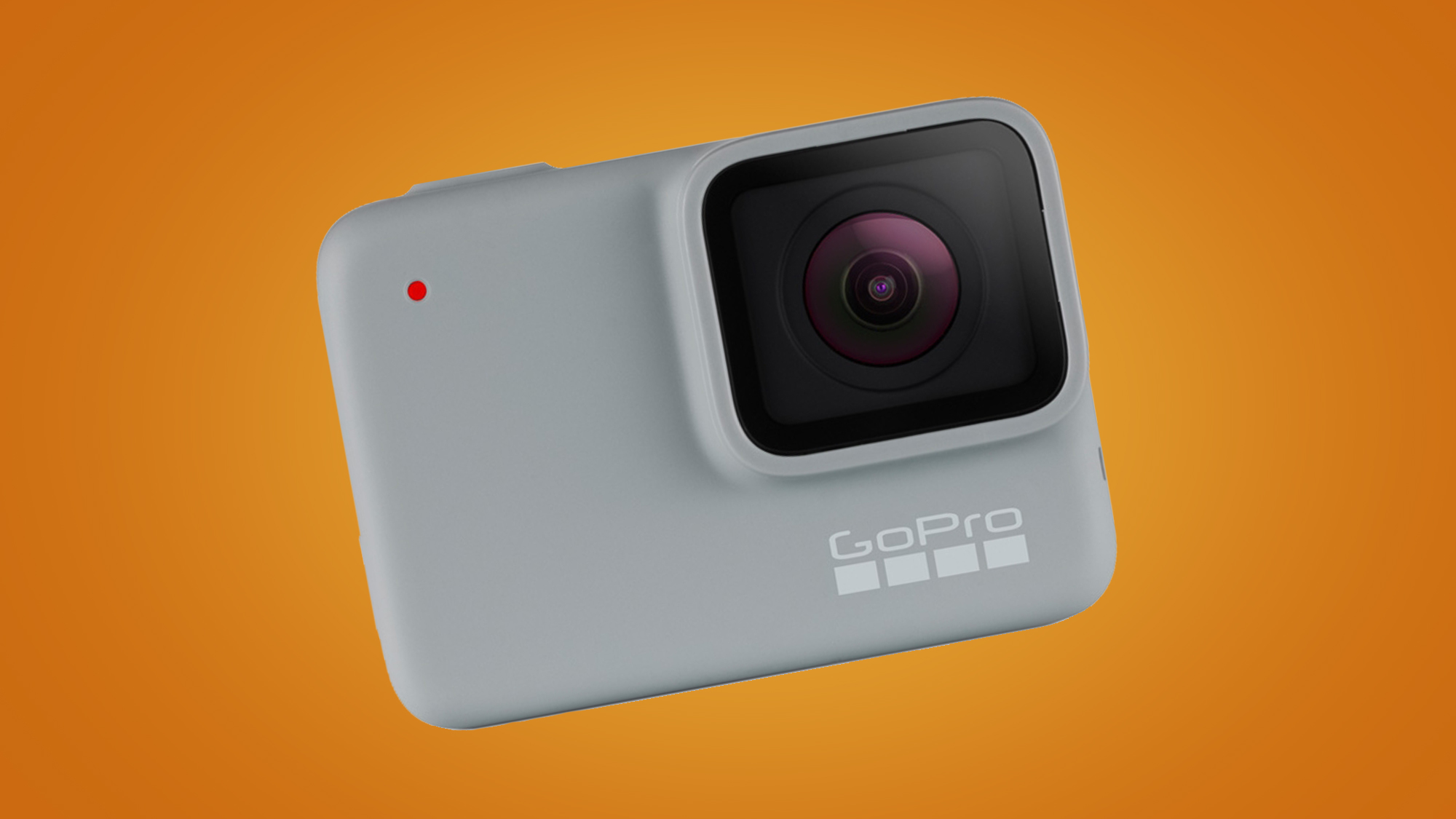
7. GoPro Hero 7 White

Officially discontinued, but one of the best bargain action cams around

Weight: 92g | Waterproof: 10m | 1440: Up to 60fps | 1080: Up to 60fps | Stills resolution: 10MP | Battery life: 1-3hrs est

Super simple to use
Now very good value
No 4K video
Non-removable battery

GoPro’s entry-level Hero 7 White barely lasted a year before it was discontinued, but you can still find stock at even lower prices than its original launch price. Cheaper than both its Silver and Black siblings, it was never intended to be a flagship; rather, the Hero 7 White is all about nailing the action cam basics on a budget. 

There’s no 4K, the battery isn’t removable, the field of view is fixed and it doesn’t have the HyperSmooth stabilization or fancier features of the other Hero 7 cameras (think TimeWarp, GPS or live-streaming). What it does offer, though, is high quality stabilized 1080p footage, a body that’s waterproof down to 10 meters and a slick, easy interface that’s a boon for beginners. 

If you’re after an affordable, capable action cam that can deliver on quality with point-and-shoot simplicity, look no further.

Best GoPro accessories 2021:

Whether you’re a professional videographer, photographer or simply someone enjoying the convenience of a small camera, GoPros have opened up new possibilities thanks to the help of innovative accessories. 

This means the market for accessories is huge, and the options available potentially more diverse than any other camera system. From camera mounts to lights to microphones to filters to 360° time-lapse and more, there are almost infinite ways to pimp your GoPro. 

Trace Action sports tracker

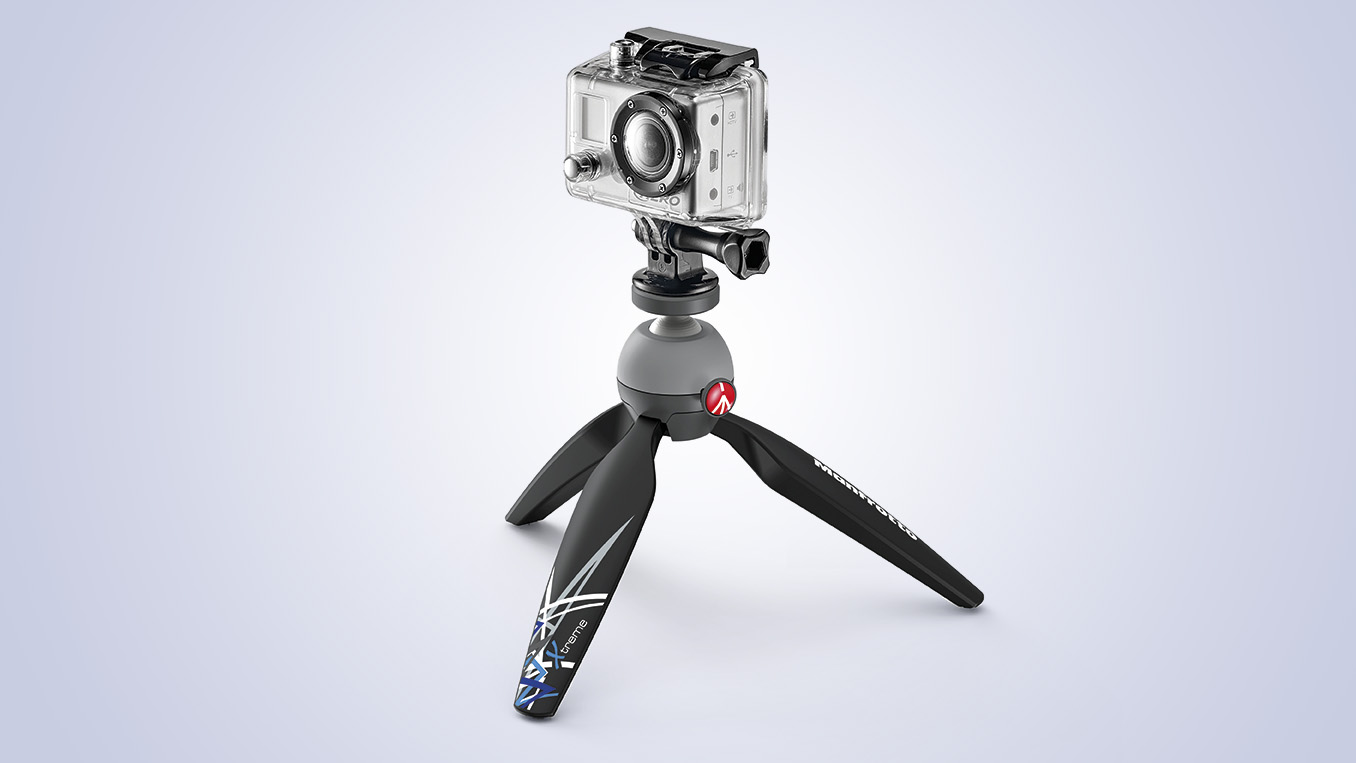
1. Manfrotto PIXI Xtreme Mini Tripod with head for GoPro cameras

Solid support in a small and lightweight package

Small and lightweight
Affordable price
Low maximum height
Single leg position

The Manfrotto PIXI Xtreme is a version of the popular mini tripod designed for use with GoPros thanks to the addition of a GoPro tripod mount adaptor. The PIXI Xtreme weights just 197g so you won’t even know you’re carrying it, and with a folded length of 21.5cm it will fit into almost any bag or even a pocket. The extended height of the tripod is 16.5cm, with simple ball head offering 360° rotation for positioning the camera. To get the height you need in some situations the PIXI Xtreme will need to be positioned on a wall or table.

Birdie GoPro accessory

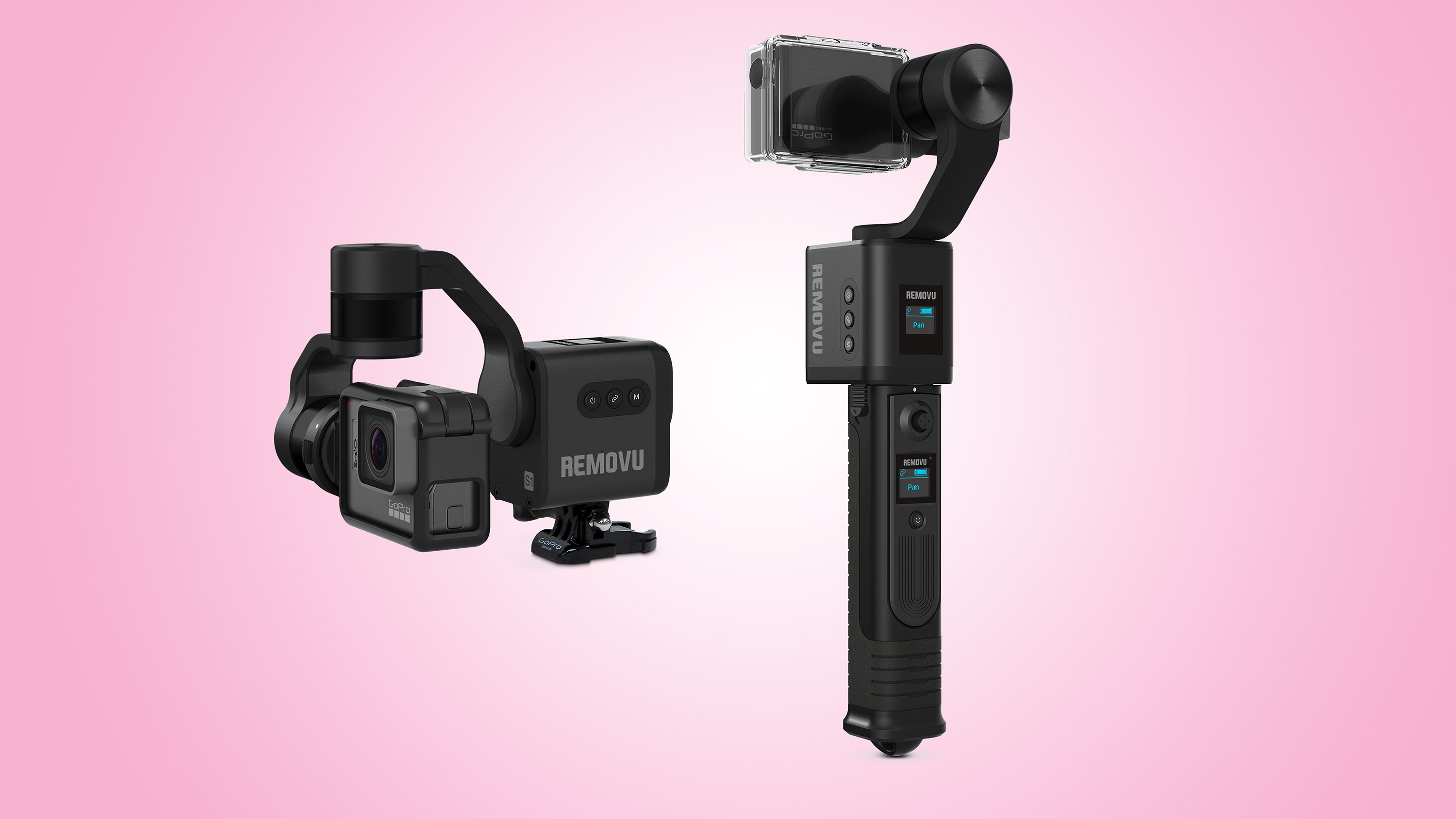
2. Removu S1

The world's first rainproof gimbal for GoPro cameras

Water resistant
Hand-held and mountable
Grip could be more comfy
No record button on grip

If you're fed-up getting shaky footage from your GoPro movies, you need a gimbal and the Removu S1 is a brilliant choice. The 3-axis stabilising gimbal is designed for use with GoPro’s Hero3, Hero4, Hero5 action cams, as well as its Session cameras. Delivering super-smooth footage and offering three main control modes (Pan, Follow and Lock), the Removu S1 is also rainproof, so you can carry on using it when the elements turn against you. It features a detachable handgrip, a removable battery, wireless remote control and is fully compatible with the GoPro range of helmet, body and bike mounts.

3. Rokk mini adjustable mount

A versatile and durable mounting system

Solid and versatile
Wide range of bases and plates
Quite bulky
Cheaper alternatives

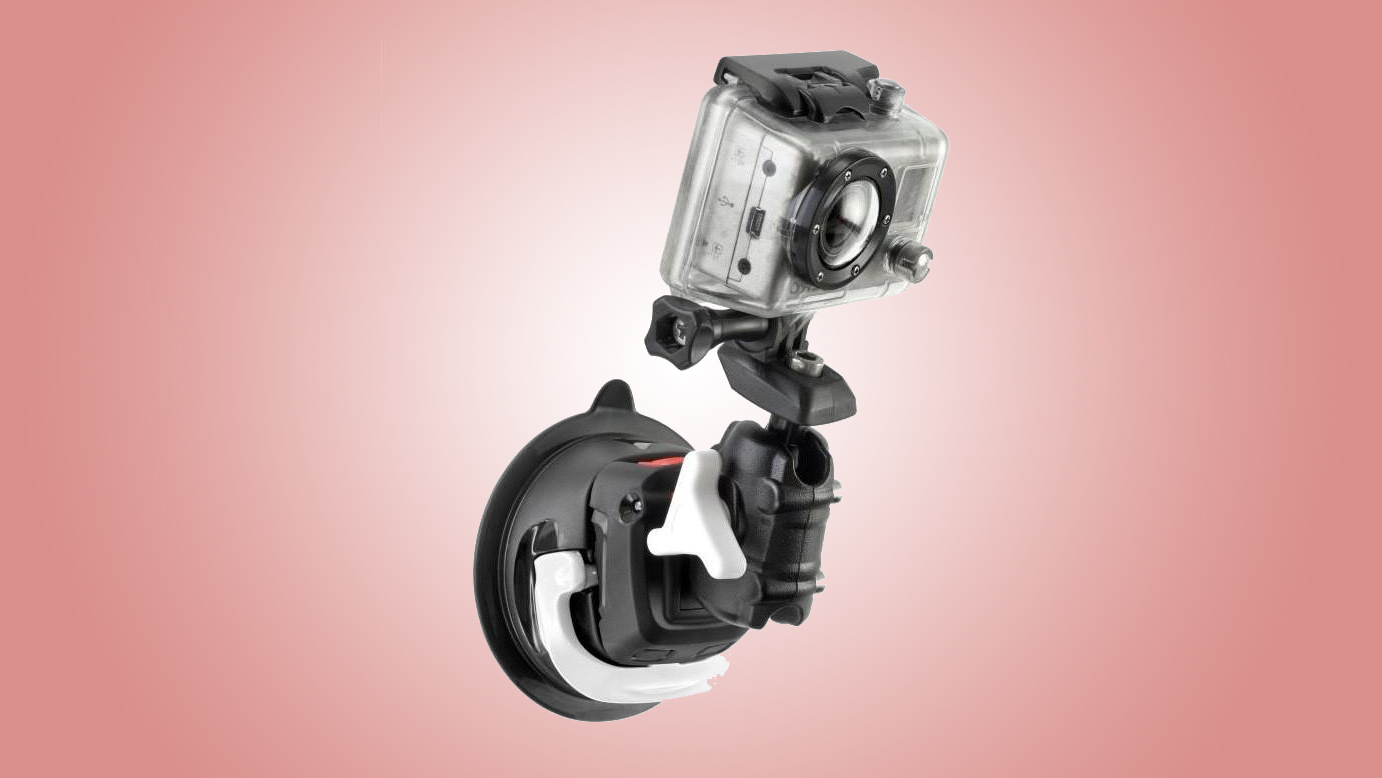
One of the appeals of GoPro action cameras is that they can be mounted remotely. If you want a tough, durable and dependable system, then the Rokk Mini is a great option. At its core is this adjustable mount, which you can then attach a wide range of bases to, including this suction cup pictured here. We tried this combo when attaching a GoPro to the bodywork of a car, with the rigid hold of the cup securely holding the camera in place. To complete the system, you'll need to also invest in a top plate (there's a dedicated GoPro top plate). 

3DR Solo

4. GoPole Scenelapse

Capture a 360° timelapse with unbelievable ease

Easy to use
Great effect
Limited controls
Best used with a tripod

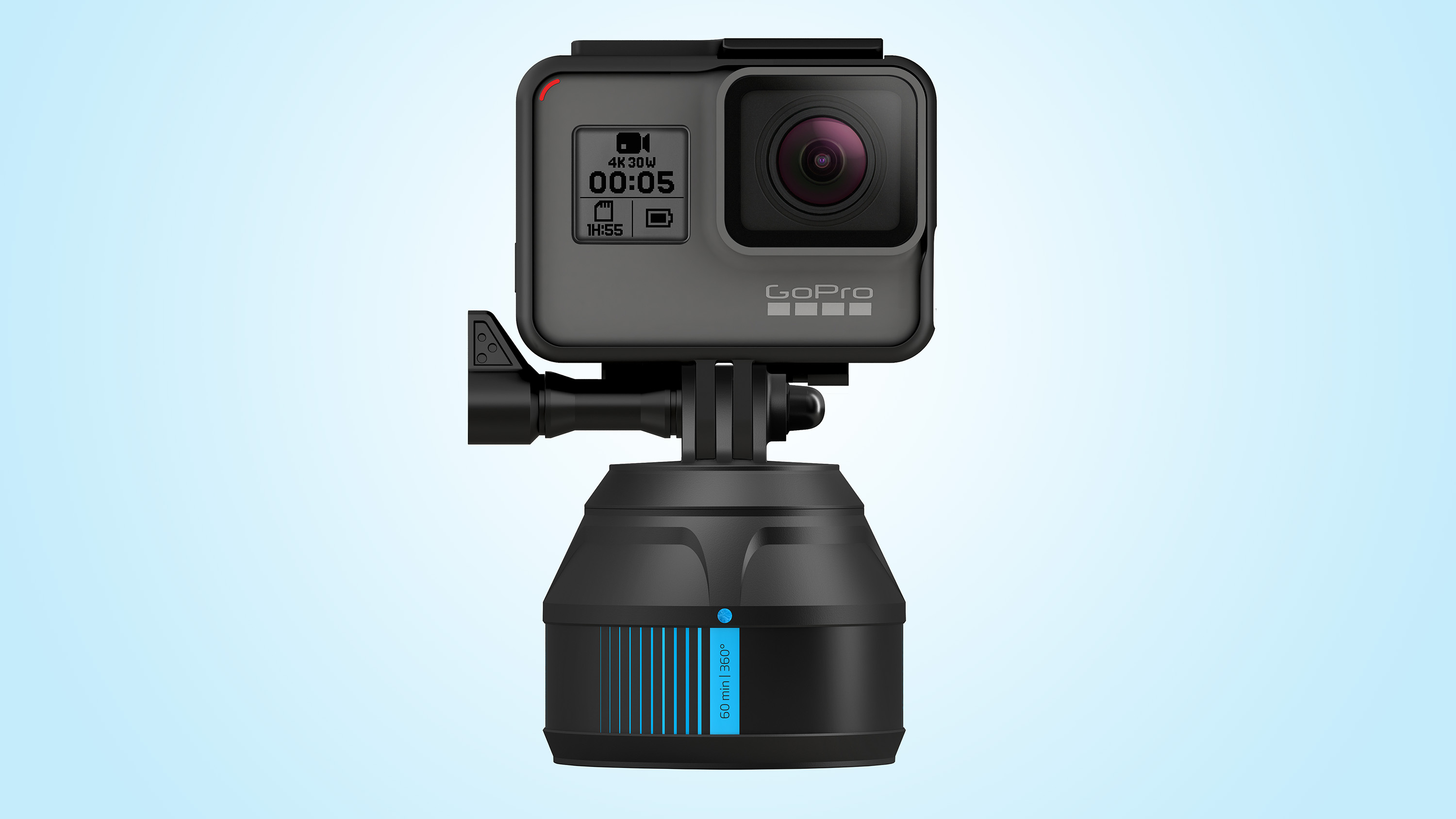
With the fantastic options shooting timelapse stills and video with GoPro cameras, a simple way to create dynamic results is to make the camera rotate during shooting. The GoPole Scenelapse allows you to do just that, offering a rotation of 360° over the course of 60 minutes. Simply set up your GoPro, wind the unit and let it do its thing. The GoPole Scenelapse is fully mechanical so no batteries are required, and it features a standard tripod screw on the bottom allowing you to attach it to a mini or full size tripod. On the top is a removable GoPro mount with a high torque thumb screw, so you can attach your GoPro or even a small DSLR or mirrorless camera. The small and easy to use unit weighs just 85g/3oz and is compatible with all GoPro cameras.

TurnsPro Time Lapse Camera

5. Tenba Shootout 14L ActionPack

Carry your GoPro gear in style with a dedicated backpack

Designed for action cameras
Rain cover included 
No space for a small DSLR or CSC
Limited space for non GoPro items

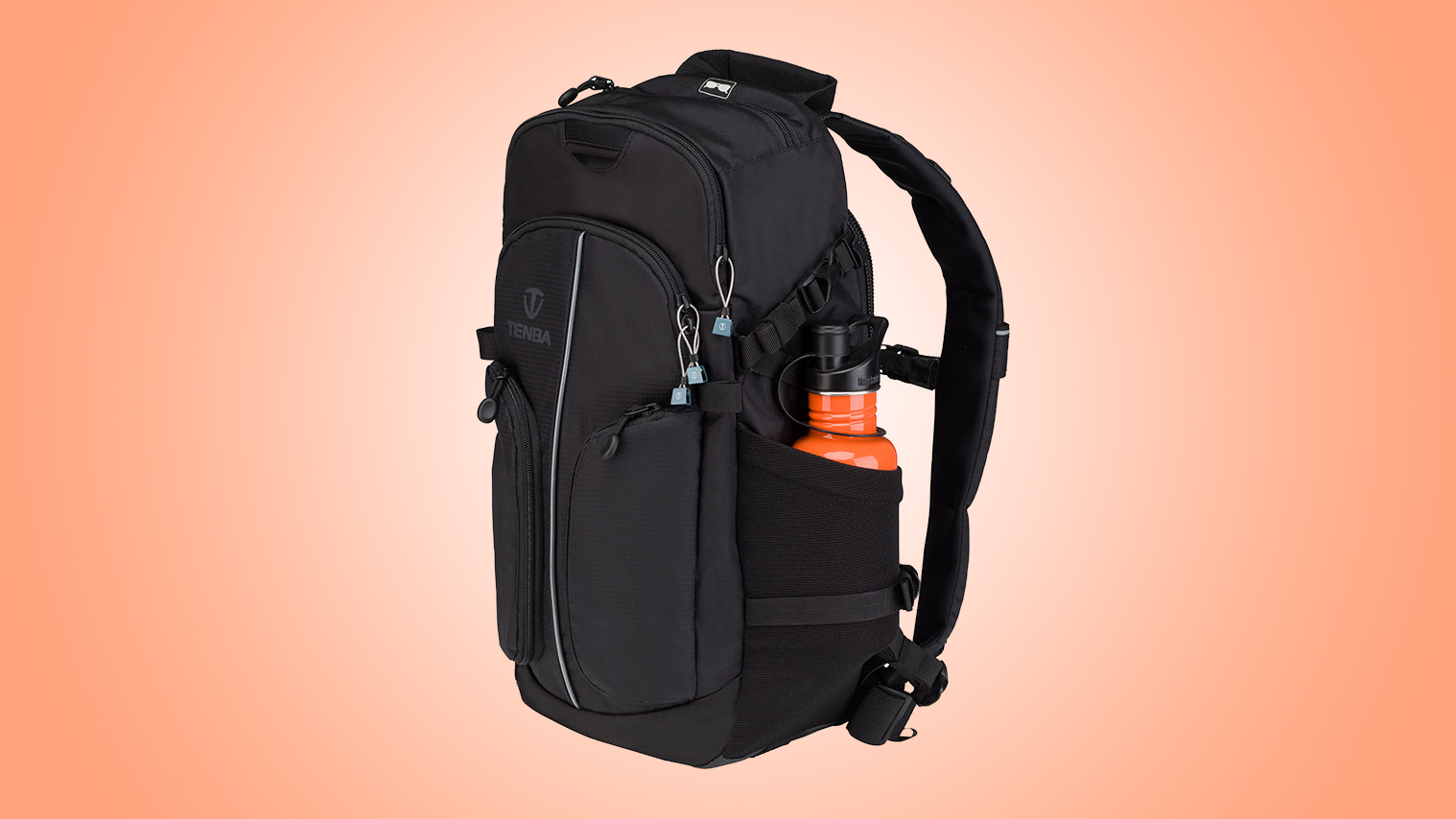
The Tenba Shootout 14L ActionPack is designed to allow you to comfortably carry a large GoPro system while you’re participating in an action sport or simply exploring the city or countryside. At just 1.4kg the bag is lightweight and the padded straps with waist belt make it comfortable and secure. Inside the bag are four removable pods, and two wallets, so you can organise your kit and gain quick and easy access to exactly what you need. The capacity of the bag allows you to carry up to four GoPros, mounts, batteries, cables and other accessories etc. Plus there’s enough room to carry a small hydration pouch and food. There’s even a tripod attachment at the bottom of the bag large enough to accommodate a travel tripod.

6. GoPro Remo

Voice activation at a distance from your GoPro

Voice activated remote
Small and convenient
No screen
Noise can affect voice control

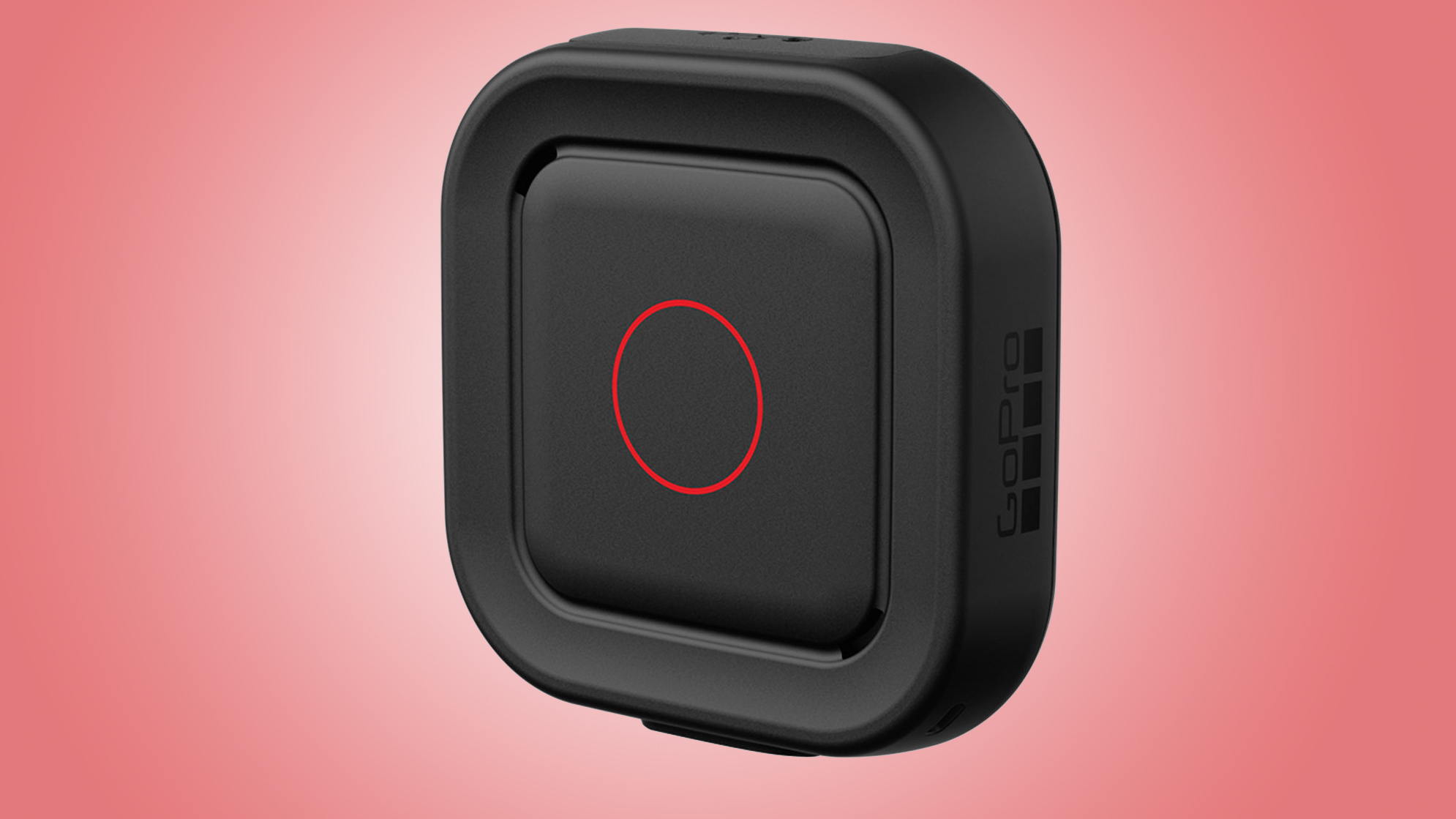
The GoPro Remo is a waterproof (up to 5m/16ft) voice controlled remote for the Hero 5 Black and Hero 5 Session cameras. This means that while both cameras offer built-in voice activation, the Remo is said to improve voice activation in noisy conditions and allows you to activate the cameras from a short distance, or works as a one button remote from up to 10m/33ft away. The Remo comes with a strap allowing it to be worn on your wrist for convenience. It can also be clipped to clothing. With 13 commands available the Remo certainly adds convenience to shooting but it’s not cheap for what it is. And unlike the older GoPro WiFi remote there’s no screen so you rely on voice commands and scrolling through functions.

7. Anker Powercore 20100

A huge amount of power for a small price

High capacity battery
Can even charge MacBooks
Charging time can be slow
Not the most compact

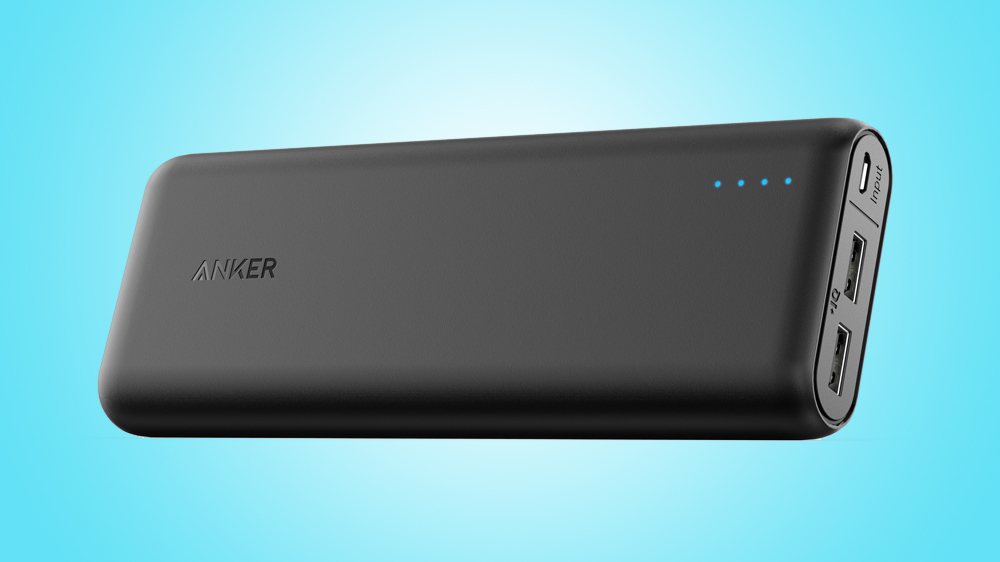
One of the problems of travelling with a GoPro is that battery life is obviously finite. You can of course buy an extra battery or two, but if you’re out in the field and away from a power outlet, charging can be difficult. Plus, if you’re shooting a long time-lapse you can’t change batteries part way through. While GoPro does manufacture its own portable power pack, the Anker Powercore 20100 provides a much higher capacity at a seriously low price in comparison. Anker claim the pack can charge smartphones up to seven times, and can even charge a MacBook using USB-C, so plenty of juice for GoPro cameras and you can even charge up to three devices at once! To ensure the safety of your devices the Powercore features smart-charging PowerIQ and current-stabilising VoltageBoost providing the fastest possible safe charge up to 2.4 A. Then there’s surge protection and short circuit prevention.

8. GoPro Pro 3.5mm microphone adapter

Use professional microphones with your GoPro

Improves sound quality massively
Creates a line input for mic or mixer
Bulky and awkward
Expensive for what it is

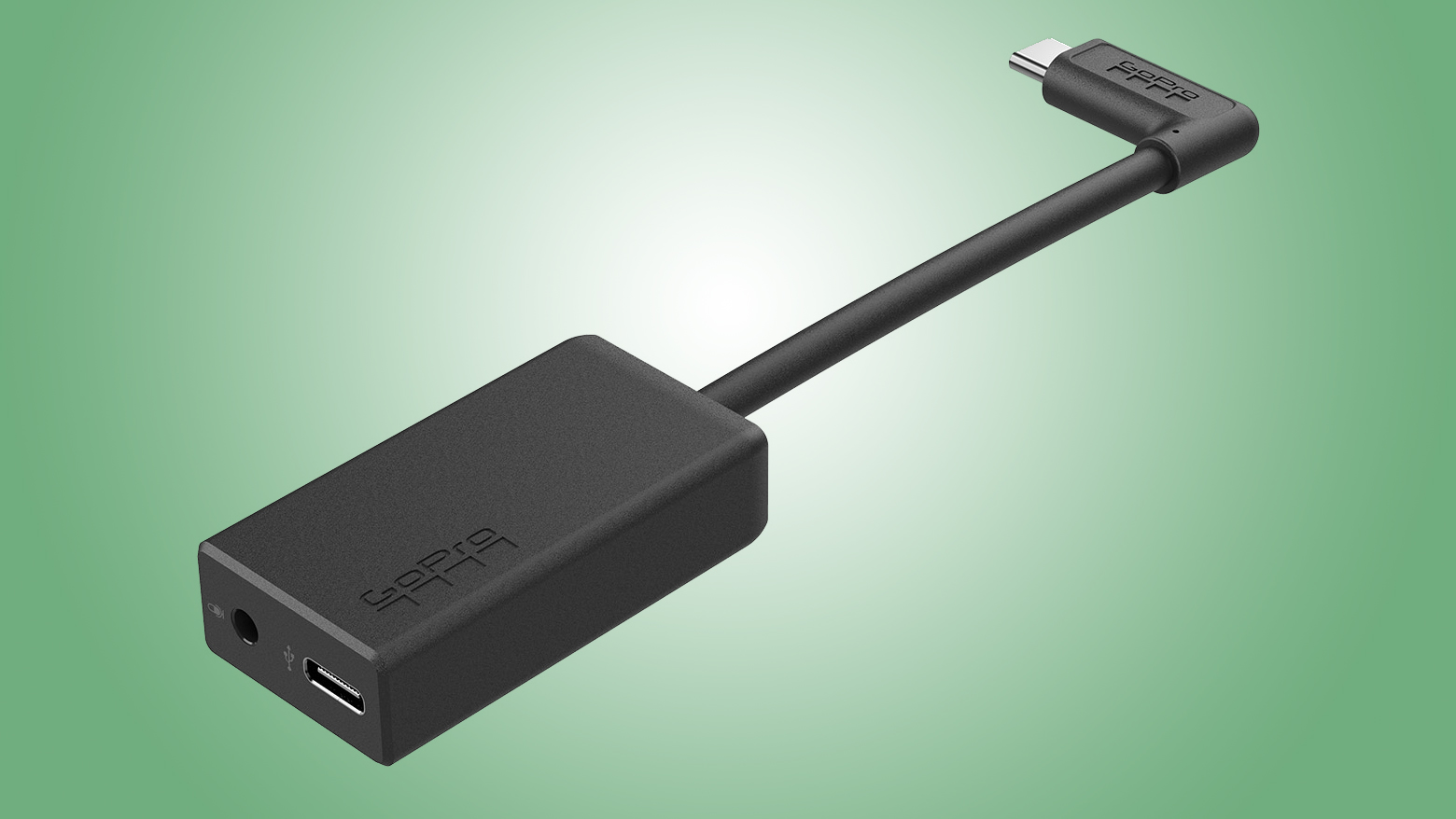
The GoPro Pro 3.5mm Microphone Adapter allows you to connect professional microphones with a 3.5mm jack to your Hero5 Black or Hero5 Session camera. This allows you to drastically improve sound compared to the camera’s built-in microphone. So whether you want to use a lapel, condenser or shotgun mic etc. this is an essential accessory. The adaptor connects to GoPros via, and is powered by USB-C, allowing for stereo sound to be recorded. It also features a 106dB stereo analogue to digital converter. With the GoPro Pro 3.5mm Microphone Adapter in use the GoPro side door will be open so the camera will no longer be waterproof, but this accessory is geared more towards vlogging than capturing great action sound.

9. GoPro Chest Mount Harness

Get a completely immersive experience

Fully adjustable
Immersive experience
Need to turn whole body
Can pick-up unwanted wind noise

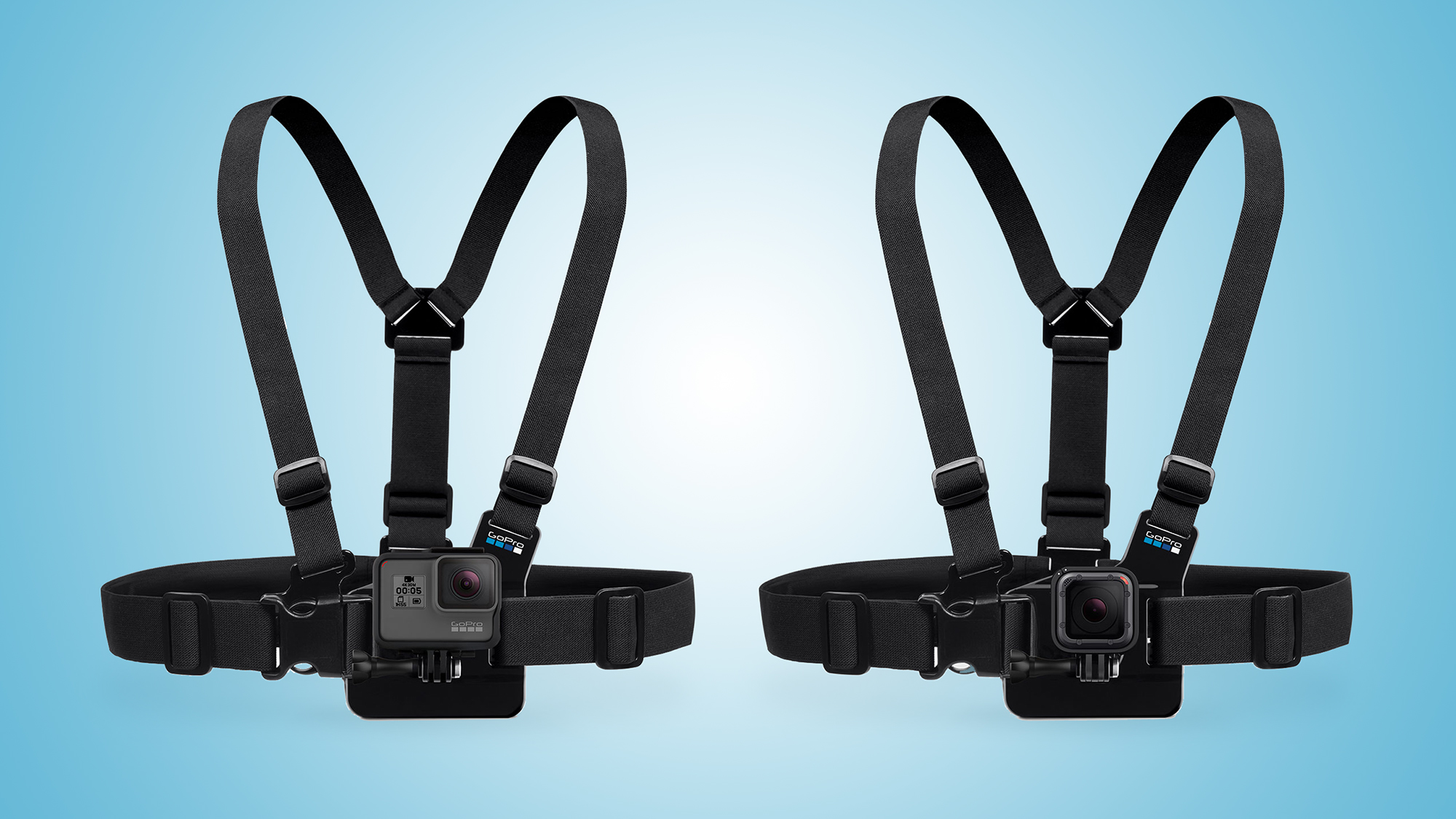
Whether you're skiing, mountain biking, white water rafting, or any other activity, GoPro's chest mount is a great piece of kit to not only capture the action. Fully adjustable to fit a wide range of adult sizes, the placement's great for getting some unique angled shots, though you will have to move your whole body to change the framing.


from TechRadar: Photography & video capture news https://ift.tt/3fV18Um
via IFTTT